Skip to main content
Microeconomics
My Course
Learn
Exam Prep
AI Tutor
Study Guides
Flashcards
Explore
Try the app
My Course
Learn
Exam Prep
AI Tutor
Study Guides
Flashcards
Explore
Try the app
Back
Dynamic AD-AS Model: Fiscal Policy definitions
You can tap to flip the card.
Dynamic ADAS Model
You can tap to flip the card.
👆
Dynamic ADAS Model
A framework where aggregate supply and demand shift right annually, reflecting ongoing economic growth and changing equilibrium.
Track progress
Control buttons has been changed to "navigation" mode.
1/15
Related flashcards
Recommended videos
Dynamic AD-AS Model: Fiscal Policy quiz
Dynamic AD-AS Model: Fiscal Policy
15 Terms
Guided course
03:59
Dynamic AD-AS Model: Contractionary Fiscal Policy
Guided course
05:25
Dynamic AD-AS Model: Expansionary Fiscal Policy
Terms in this set (15)
Hide definitions
Dynamic ADAS Model
A framework where aggregate supply and demand shift right annually, reflecting ongoing economic growth and changing equilibrium.
Fiscal Policy
Government intervention through spending or taxation to influence aggregate demand and maintain potential GDP.
Expansionary Fiscal Policy
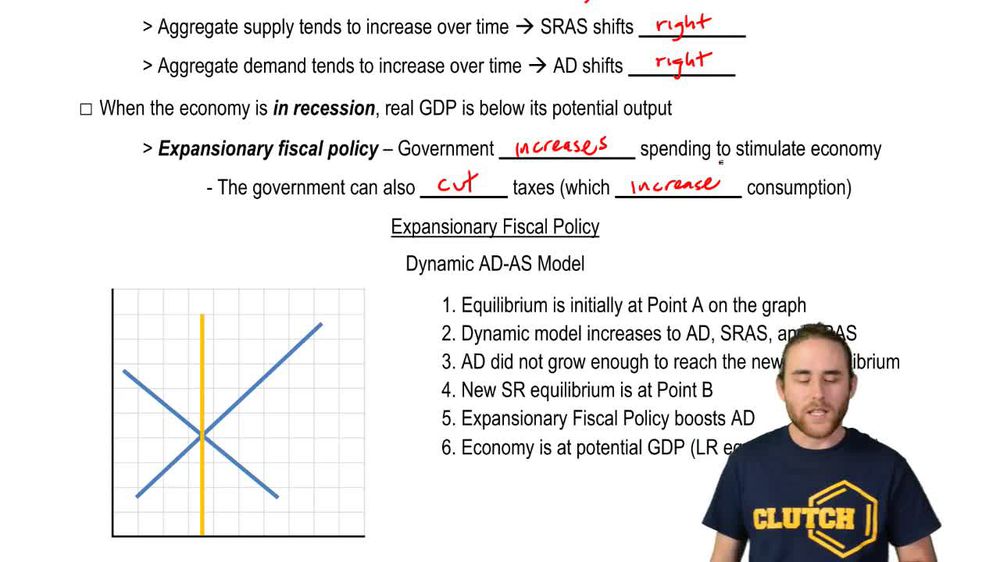
A strategy involving increased government spending or tax cuts to boost aggregate demand during recession.
Contractionary Fiscal Policy
A method using reduced government spending or higher taxes to lower aggregate demand and control inflation.
Aggregate Demand
Total spending on goods and services in an economy, affected by government actions and consumer behavior.
Aggregate Supply
Total output of goods and services available in an economy, shifting right as the economy grows.
Long Run Equilibrium
A state where aggregate demand, short run aggregate supply, and long run aggregate supply intersect at potential GDP.
Potential GDP
The maximum sustainable output an economy can achieve without causing inflation or recession.
Short Run Aggregate Supply
The current level of goods and services produced, adjusting annually alongside aggregate demand and long run supply.
Government Spending
Expenditures by the public sector that directly impact aggregate demand and economic equilibrium.
Taxation
Revenue collection by authorities, influencing consumer spending and aggregate demand through fiscal policy.
Recession
A period when real GDP falls below potential, prompting expansionary fiscal measures to restore equilibrium.
Inflation
A rise in price levels, often occurring when aggregate demand exceeds potential GDP, requiring contractionary policy.
Price Level
A measure of average prices in the economy, shifting with changes in aggregate demand and supply.
Market Equilibrium
A condition where supply and demand balance, ensuring stable prices and output in the dynamic ADAS context.
 BackBack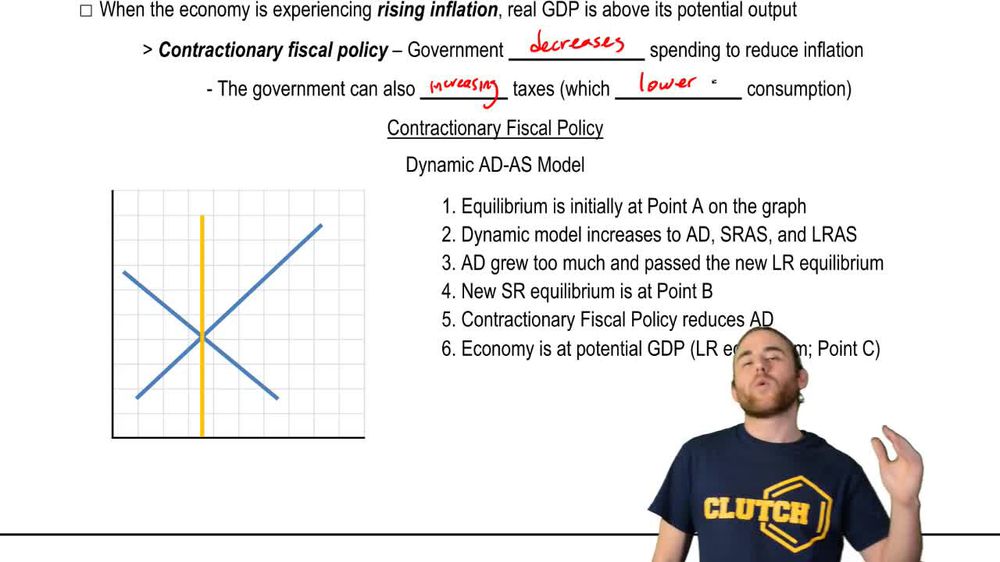
 03:59
03:59