Skip to main content
Microeconomics
My Course
Learn
Exam Prep
AI Tutor
Study Guides
Flashcards
Explore
Try the app
My Course
Learn
Exam Prep
AI Tutor
Study Guides
Flashcards
Explore
Try the app
Back
Disinflation and Deflation definitions
You can tap to flip the card.
Disinflation
You can tap to flip the card.
👆
Disinflation
A period when the rate of price increases slows, but prices continue to rise at a reduced pace compared to previous years.
Track progress
Control buttons has been changed to "navigation" mode.
1/15
Related flashcards
Recommended videos
Disinflation and Deflation quiz
Disinflation and Deflation
15 Terms
Guided course
02:29
Deflation
Guided course
07:18
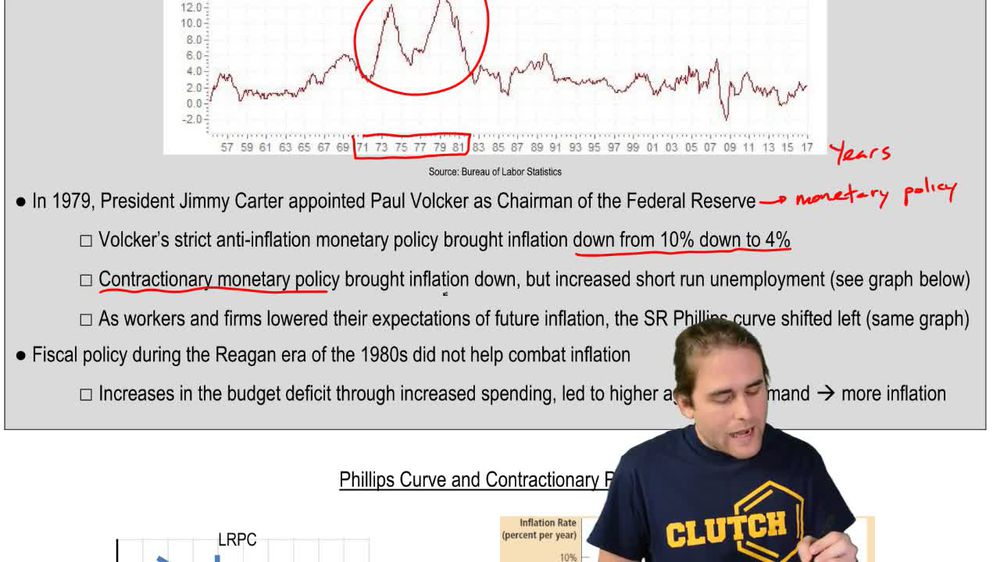
Disinflation (Paul Volcker)
Terms in this set (15)
Hide definitions
Disinflation
A period when the rate of price increases slows, but prices continue to rise at a reduced pace compared to previous years.
Deflation
A situation where the overall price level falls, resulting in a negative rate of inflation and lower prices than the prior year.
Inflation Rate
A measure indicating how quickly prices are rising or falling, often expressed as a percentage change over time.
Price Level
An aggregate measure reflecting the average prices of goods and services in an economy at a given time.
Contractionary Monetary Policy
A central bank strategy that reduces money supply and raises interest rates to curb inflation, often increasing unemployment.
Phillips Curve
A graphical representation showing the inverse relationship between inflation and unemployment in the short run.
Short Run Phillips Curve
A curve illustrating how inflation and unemployment trade off temporarily before expectations adjust.
Long Run Equilibrium
A state where unemployment returns to its natural rate and inflation stabilizes after policy adjustments.
Natural Rate of Unemployment
The typical level of joblessness in an economy, unaffected by short-term policy changes or cyclical fluctuations.
Monetary Policy
Actions by a central bank to influence money supply and interest rates, impacting inflation and economic activity.
Fiscal Policy
Government decisions on spending and taxation that affect aggregate demand and can influence inflation.
Aggregate Demand
The total demand for goods and services within an economy, influencing price levels and inflation.
Inflation Expectations
Beliefs held by workers and firms about future price increases, which can shift economic curves and affect outcomes.
Consumer Price Index
A statistical measure tracking changes in the cost of a fixed basket of goods and services over time.
Budget Deficit
A financial situation where government expenditures exceed revenues, often leading to increased aggregate demand.
 BackBack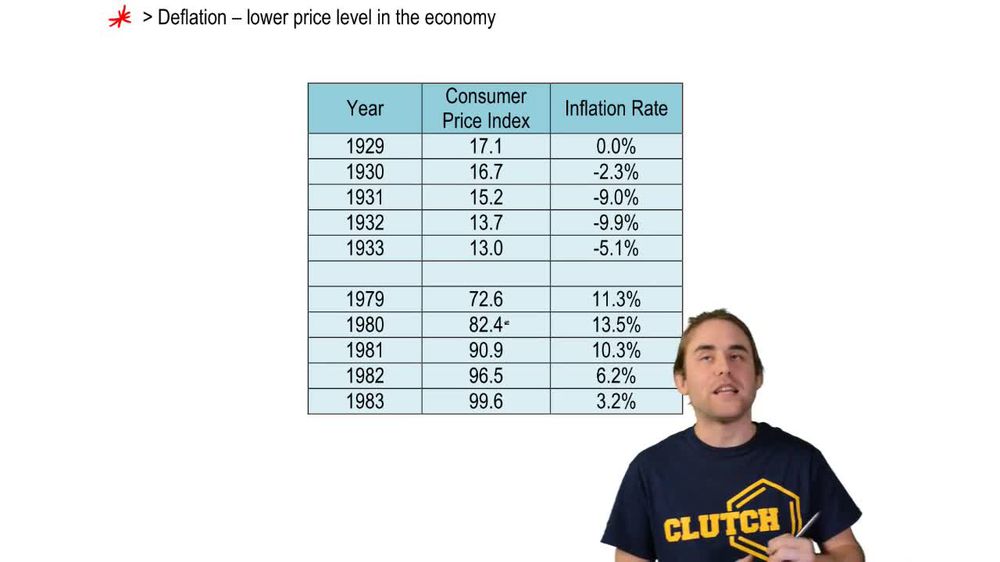
 02:29
02:29