Skip to main content
Microeconomics
My Course
Learn
Exam Prep
AI Tutor
Study Guides
Flashcards
Explore
Try the app
My Course
Learn
Exam Prep
AI Tutor
Study Guides
Flashcards
Explore
Try the app
Back
Costs of Inflation: Shoe-leather Costs and Menu Costs definitions
You can tap to flip the card.
Inflation
You can tap to flip the card.
👆
Inflation
General increase in prices over time, reducing the purchasing power of money and affecting economic decisions.
Track progress
Control buttons has been changed to "navigation" mode.
1/14
Related flashcards
Recommended videos
Costs of Inflation: Shoe-leather Costs and Menu Costs quiz
Costs of Inflation: Shoe-leather Costs and Menu Costs
15 Terms
Guided course
04:37
Costs of Inflation: Shoe-leather Costs, Menu Costs, and Tax Costs
Terms in this set (14)
Hide definitions
Inflation
General increase in prices over time, reducing the purchasing power of money and affecting economic decisions.
Shoe Leather Cost
Resources wasted as people frequently visit banks to minimize cash holdings due to rising prices.
Menu Cost
Expenses businesses incur when updating prices, such as printing new menus or retagging products.
Hyperinflation
Extremely rapid price increases, typically above 50%, causing severe economic disruptions.
Purchasing Power
Ability of money to buy goods and services, which diminishes as prices rise.
Nominal Gain
Increase in monetary value not adjusted for inflation, often leading to misleading perceptions of profit.
Phantom Income
Apparent profit resulting from inflation rather than actual increases in real value.
Tax Cost
Financial burden from taxes on nominal gains, even when real purchasing power remains unchanged.
Market Efficiency
Optimal allocation of resources, which can be distorted by inflation-related costs.
Consumer Surplus
Difference between what consumers are willing to pay and what they actually pay, affected by inflation.
Price Tag
Label indicating the cost of a product, often changed frequently during inflationary periods.
Asset Value
Worth of property or investments, which may rise nominally due to inflation without real gains.
Interest
Return earned on money held in banks, influencing decisions about cash holdings during inflation.
Economic Distortion
Misallocation of resources and altered incentives caused by inflation and its associated costs.
 BackBack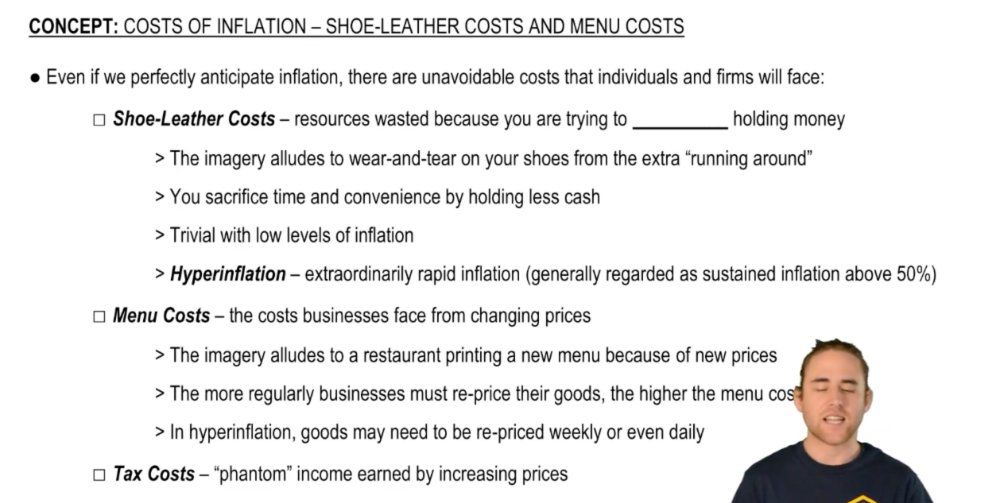
 04:37
04:37