Back

Consumer Optimum Consumption: Marginal Utility per Dollar Spent definitions

Control buttons has been changed to "navigation" mode.
1/15
  • Optimum Consumption

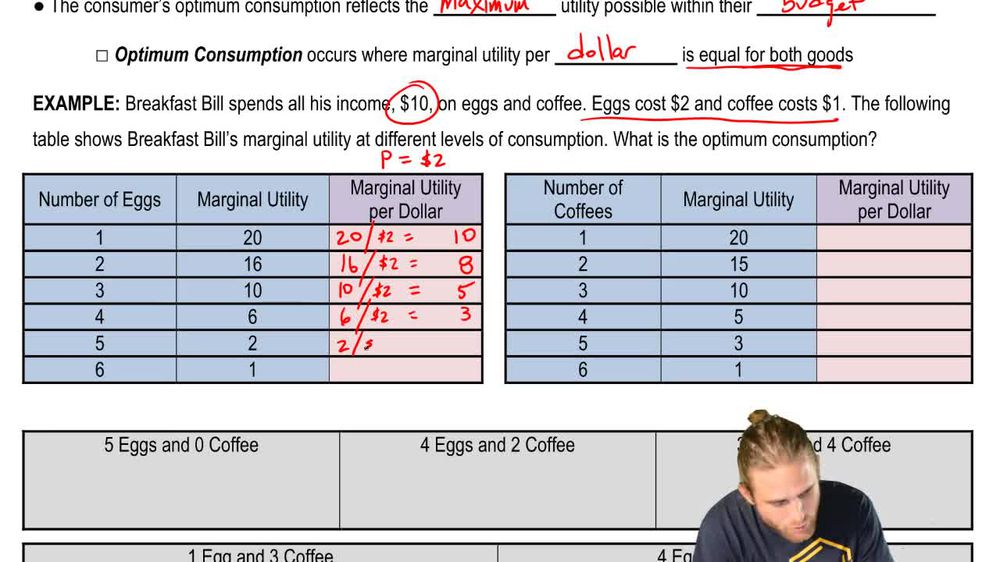
    Achieving the highest satisfaction possible by allocating income so that utility per dollar is equal across all goods.
  • Marginal Utility

    Additional satisfaction gained from consuming one more unit of a good, typically decreases as more is consumed.
  • Budget Constraint

    Limitation imposed by available income, restricting the combinations of goods a consumer can purchase.
  • Utility

    Measure of satisfaction or happiness derived from consuming goods or services.
  • Marginal Utility per Dollar

    Ratio of extra satisfaction received to the price paid for an additional unit, used to compare different goods.
  • Diminishing Returns

    Phenomenon where each additional unit consumed provides less added satisfaction than the previous one.
  • Consumption Bundle

    Combination of quantities of different goods purchased within a given budget.
  • Total Utility

    Sum of satisfaction obtained from all units of goods consumed.
  • Income

    Amount of money available to spend on goods and services, determining possible consumption choices.
  • Price

    Monetary cost required to acquire a unit of a good or service.
  • Satisfaction

    Level of contentment or pleasure experienced from consuming goods.
  • Reallocation

    Adjustment of spending between goods to increase overall satisfaction within a fixed budget.
  • Maximum Utility

    Highest possible level of satisfaction attainable given income and prices.
  • Comparative Scenario

    Evaluation of different spending combinations to determine which yields greater satisfaction.
  • Purchasable Bundle

    Set of goods that can be bought without exceeding the available budget.