Who is considered the founder of the classical model of economics?
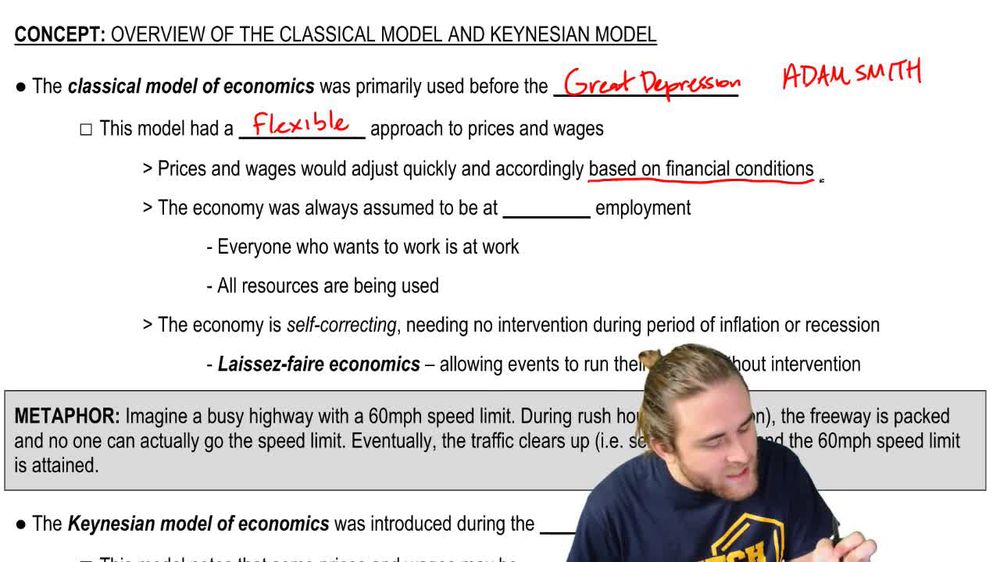
Adam Smith is considered the founder, especially through his work 'The Wealth of Nations.'
What is the main assumption about prices and wages in the classical model?
The classical model assumes that prices and wages are flexible and adjust quickly to market conditions.
How does the classical model view the role of government intervention in the economy?
The classical model believes in laissez-faire, meaning no government intervention is needed because markets are self-correcting.
What does the classical model assume about employment levels?
It assumes the economy is always at full employment, so anyone who wants a job can get one.
What economic event led to the development of the Keynesian model?
The Great Depression led to the development of the Keynesian model.
Who developed the Keynesian model of economics?
John Maynard Keynes developed the Keynesian model.
What does the Keynesian model say about the flexibility of wages and prices?
The Keynesian model argues that wages and prices can be 'sticky,' meaning they do not adjust quickly to changes in the economy.
According to the Keynesian model, is the economy always at full employment?
No, the Keynesian model recognizes that unemployment can persist and the economy is not always at full employment.
How does the Keynesian model view government intervention?
The Keynesian model sees government intervention as necessary to address recessions and inflation.
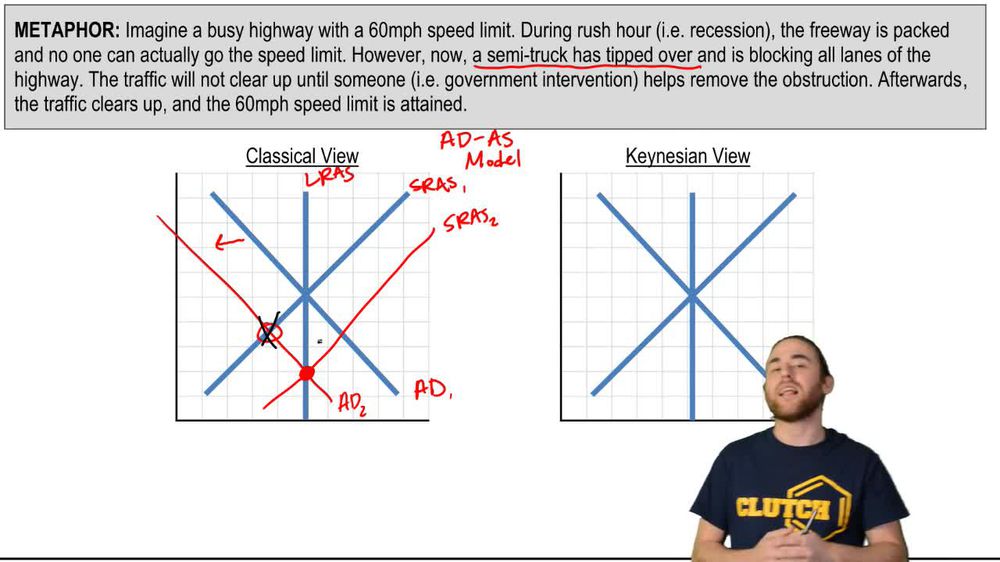
In the aggregate demand and supply framework, how does the classical model respond to a fall in aggregate demand?
The classical model predicts that prices and wages adjust immediately, returning the economy to long-run equilibrium without a prolonged recession.
What happens in the Keynesian model when aggregate demand falls?
The Keynesian model predicts a short-run equilibrium below potential GDP, with unemployment, until government intervention or other adjustments restore equilibrium.
What is meant by 'sticky wages' in the Keynesian model?
'Sticky wages' means that wages do not adjust quickly due to factors like contracts or labor unions, causing slow economic adjustment.
What metaphor is used to describe the classical model's self-correcting nature?
A busy highway that eventually clears up on its own, allowing everyone to go the speed limit again, represents the classical model's self-correction.
What metaphor illustrates the need for government intervention in the Keynesian model?
A highway blocked by a tipped-over truck that requires government action to clear the obstruction illustrates the Keynesian need for intervention.
What is the main difference between the classical and Keynesian models regarding economic adjustment?
The classical model predicts immediate adjustment to long-run equilibrium, while the Keynesian model allows for short-run disequilibrium due to sticky prices and wages.
 Back
Back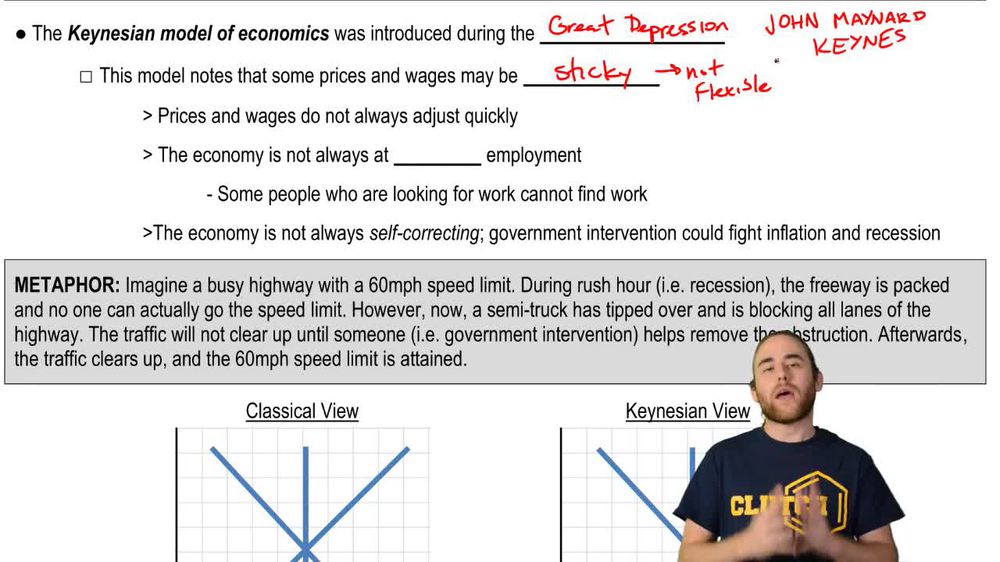
 03:04
03:04