What are the three steps to analyze a shift in aggregate demand in the AD-AS model?
First, shift the aggregate demand curve; second, find the new short-run equilibrium; third, shift the short-run aggregate supply in the opposite direction to restore long-run equilibrium.
What typically causes a leftward shift in the aggregate demand curve?
A leftward shift is usually caused by a decrease in components of aggregate demand, such as reduced investment spending.
In the short run, what happens to price level and real GDP when aggregate demand decreases?
Both the price level and real GDP decrease in the short run when aggregate demand decreases.
How does the short-run aggregate supply curve respond to a decrease in aggregate demand over time?
The short-run aggregate supply curve shifts to the right to restore long-run equilibrium at a lower price level.
What is the effect on long-run equilibrium GDP after a decrease in aggregate demand?
Long-run equilibrium GDP returns to its original level, but the price level is lower.
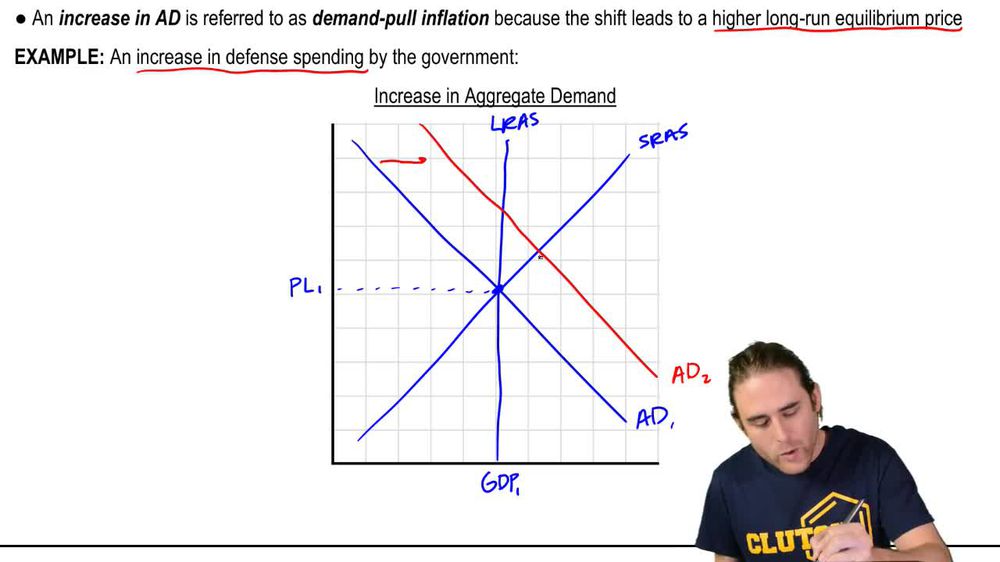
What is demand-pull inflation?
Demand-pull inflation occurs when an increase in aggregate demand raises the price level in the short run.
What happens to the short-run equilibrium when aggregate demand increases due to higher government spending?
The short-run equilibrium moves to a higher price level and higher real GDP.
Why can real GDP temporarily exceed long-run equilibrium GDP after an increase in aggregate demand?
Because resources are overutilized, leading to a 'hot' economy with overemployment and higher output in the short run.
How does the short-run aggregate supply curve adjust after an increase in aggregate demand?
It shifts to the left, raising the price level further and bringing real GDP back to its long-run equilibrium.
After all adjustments, what happens to the long-run equilibrium price level following an increase in aggregate demand?
The long-run equilibrium price level is higher, while real GDP returns to its original long-run value.
Which components make up aggregate demand?
Aggregate demand consists of consumption, investment, government purchases, and net exports.
What is the role of short-run aggregate supply in the AD-AS model after a demand shock?
Short-run aggregate supply adjusts in the opposite direction of the aggregate demand shift to restore long-run equilibrium.
What is the immediate effect of a decrease in expected future profits on the AD-AS model?
It decreases investment spending, shifting aggregate demand to the left and lowering both price level and real GDP in the short run.
How does the AD-AS model illustrate the difference between short-run and long-run equilibrium?
Short-run equilibrium is where the new aggregate demand curve meets short-run aggregate supply, while long-run equilibrium is restored when short-run aggregate supply shifts to intersect with long-run aggregate supply.
What happens to the price level and GDP in the short run and long run after an increase in aggregate demand?
In the short run, both price level and GDP rise; in the long run, the price level remains higher but GDP returns to its original long-run value.
 Back
Back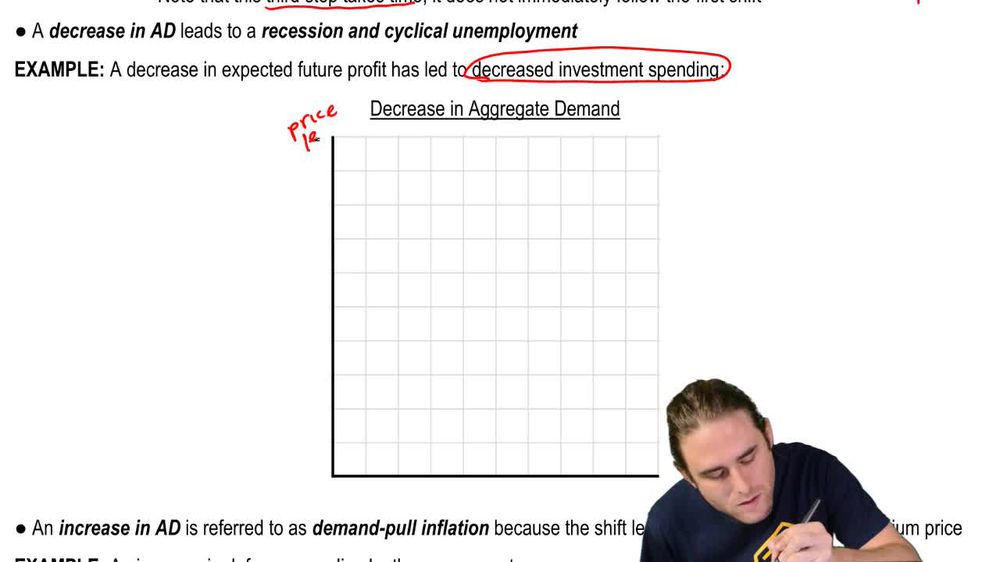
 08:15
08:15