Describe an example of bioconversion. What metabolic processes can result in fuels?
Ch. 28 - Applied and Industrial Microbiology

Tortora14th EditionMicrobiology: An IntroductionISBN: 9780138200398Not the one you use?Change textbook
Chapter 28, Problem 9
Which of the following reactions is undesirable in winemaking?
a. Sucrose → ethanol
b. Ethanol → acetic acid
c. Malic acid → lactic acid
d. Glucose → pyruvic acid
Verified step by step guidance1
Step 1: Understand the context of winemaking and the role of each reaction. Winemaking primarily involves fermentation, where sugars are converted into ethanol by yeast.
Step 2: Analyze each reaction: (a) Sucrose → ethanol represents the fermentation of sugar to alcohol, which is a desired process in winemaking.
Step 3: Reaction (b) Ethanol → acetic acid involves the oxidation of ethanol to acetic acid, which leads to vinegar formation and spoilage, making it undesirable in winemaking.
Step 4: Reaction (c) Malic acid → lactic acid is malolactic fermentation, a process that softens wine acidity and is often desirable in winemaking.
Step 5: Reaction (d) Glucose → pyruvic acid is a step in glycolysis, a normal metabolic pathway leading to fermentation, so it is not undesirable.

Verified video answer for a similar problem:
This video solution was recommended by our tutors as helpful for the problem above.
Video duration:
1mWas this helpful?
Key Concepts
Here are the essential concepts you must grasp in order to answer the question correctly.
Fermentation in Winemaking
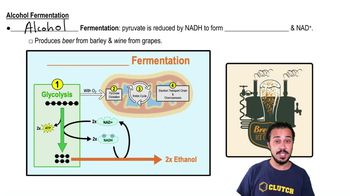
Fermentation is the biochemical process where yeast converts sugars like sucrose and glucose into ethanol and carbon dioxide. This reaction is essential in winemaking as it produces alcohol, the primary desired product, and influences the wine's flavor and aroma.
Recommended video:
Guided course
Alcohol Fermentation
Acetic Acid Formation and Wine Spoilage
The conversion of ethanol to acetic acid is typically caused by acetic acid bacteria and is undesirable in winemaking. This reaction leads to vinegar-like off-flavors, spoilage, and a decrease in wine quality, making it a negative reaction to avoid.
Recommended video:
Guided course
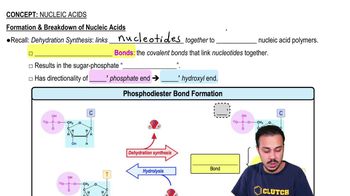
Formation & Breakdown of Nucleic Acids
Malolactic Fermentation
Malolactic fermentation is a secondary fermentation where malic acid is converted into lactic acid by bacteria. This process softens the wine's acidity, improves mouthfeel, and is generally considered beneficial in many wine styles.
Recommended video:
Guided course
Alcohol Fermentation
Related Practice
Textbook Question
2
views
Textbook Question
Which one of the following is not a fuel produced by microorganisms?
a. Algal oil
b. Ethanol
c. Hydrogen
d. Methane
e. Uranium
2
views
Textbook Question
Which of the following reactions is an oxidation carried out by A. ferrooxidans?
a. Fe²⁺ → Fe³⁺
b. Fe³⁺ → Fe²⁺
c. CuS→ CuSO₄
d. Fe⁰ → Cu⁰
e. None of the above
3
views
Textbook Question
Which type of radiation is used to preserve foods?
a. Ionizing
b. Nonionizing
c. Radiowaves
d. Microwaves
e. All of the above
5
views
Textbook Question
Label the trophophase and idiophase in this graph. Indicate when primary and secondary metabolites are formed.
Textbook Question
Van Leeuwenhoek was the first to see this budding microbe with a nucleus and cell wall; although humans have used it since before the beginning of recorded history, Louis Pasteur was the first to figure out what it does.