
Ch. 23 - Microbial Diseases of the Cardiovascular and Lymphatic Systems
Tortora - Microbiology: An Introduction 14th Edition
Tortora14th EditionMicrobiology: An IntroductionISBN: 9780138200398Not the one you use?Change textbook
Chapter 23, Problem 1

Show the path of Streptococcus from a focal infection to the pericardium. Identify the portals of entry for T. cruzi, Orthohantavirus, and Cytomegalovirus.
<IMAGE>

Verified step by step guidance
1
Begin by understanding the concept of a focal infection: it is a localized infection that can spread to other parts of the body through various routes such as the bloodstream, lymphatic system, or direct extension.
Trace the possible routes Streptococcus can take from a focal infection site to reach the pericardium. This typically involves hematogenous spread (via the bloodstream) or direct extension from nearby infected tissues.
Identify the portals of entry for each pathogen by considering their common modes of transmission: for Trypanosoma cruzi, the portal of entry is usually through the skin via the bite of the triatomine bug or mucous membranes; for Orthohantavirus, entry occurs through inhalation of aerosolized rodent excreta; and for Cytomegalovirus, entry can be through bodily fluids such as saliva, urine, or sexual contact.
Summarize the pathways and portals of entry by linking the biological behavior of each microorganism to its typical infection route and target tissues.
Review the clinical relevance of these pathways, emphasizing how understanding the route of infection helps in diagnosis, treatment, and prevention of diseases caused by these pathogens.

Verified video answer for a similar problem:

This video solution was recommended by our tutors as helpful for the problem above.
Video duration:
1m
Was this helpful?

Key Concepts

Here are the essential concepts you must grasp in order to answer the question correctly.

Pathogenesis and Spread of Streptococcus

Understanding how Streptococcus bacteria spread from a focal infection to distant sites like the pericardium involves knowledge of bacterial invasion routes, including hematogenous dissemination and direct extension. This concept explains how localized infections can lead to systemic complications such as pericarditis.
Recommended video:
Guided course
02:35
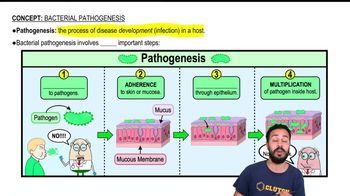
Intro to Bacterial Pathogenesis

Portals of Entry for Infectious Agents

Portals of entry are the routes through which pathogens enter the host, such as mucous membranes, skin breaches, or vector bites. Identifying these portals for T. cruzi, Orthohantavirus, and Cytomegalovirus is essential to understand their transmission and initial infection sites.
Recommended video:
Guided course
02:54
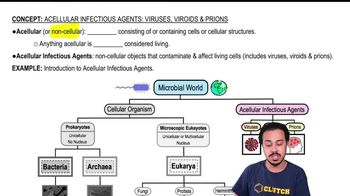
Acellular Infectious Agents: Viruses, Viroids & Prions

Characteristics and Transmission of T. cruzi, Orthohantavirus, and Cytomegalovirus

Each pathogen has unique transmission modes: T. cruzi is transmitted via triatomine bug feces entering through skin or mucosa; Orthohantavirus enters through inhalation of aerosolized rodent excreta; Cytomegalovirus spreads mainly via bodily fluids and infects through mucosal surfaces. Recognizing these helps in identifying their portals of entry.
Recommended video:
Guided course
02:08
T Dependent & T Independent Antigens