Ch. 23 - Microbial Diseases of the Cardiovascular and Lymphatic Systems
Tortora - Microbiology: An Introduction 14th Edition
Tortora14th EditionMicrobiology: An IntroductionISBN: 9780138200398Not the one you use?Change textbook
Chapter 23, Problem 10

Nineteen workers in a slaughterhouse developed fever and chills, with the fever spiking to 40°C each evening. The most likely method of transmission of this disease is
a. A vector.
b. The respiratory route.
c. A puncture wound.
d. An animal bite.
e. Water.

Verified step by step guidance
1
Step 1: Identify the clinical presentation and setting. The workers developed fever and chills with a high fever spiking each evening, which suggests a systemic infection with a possible zoonotic origin due to the slaughterhouse environment.
Step 2: Consider the common diseases associated with slaughterhouse workers. These workers are often exposed to animal blood, tissues, and fluids, which can harbor pathogens transmitted through specific routes.
Step 3: Analyze each transmission route option in the context of the slaughterhouse setting: a vector (like ticks or insects), respiratory route (inhalation of aerosols), puncture wounds (injuries from sharp tools), animal bites, and waterborne transmission.
Step 4: Recognize that many zoonotic infections in slaughterhouse workers, such as brucellosis, are commonly transmitted through direct contact with animal tissues or fluids, often entering through skin abrasions or puncture wounds.
Step 5: Conclude that the most likely method of transmission in this scenario is through puncture wounds, as workers handling animals and carcasses are at risk of injury that allows pathogens to enter the body.

Verified video answer for a similar problem:

This video solution was recommended by our tutors as helpful for the problem above.
Video duration:
2m
Was this helpful?

Key Concepts

Here are the essential concepts you must grasp in order to answer the question correctly.

Zoonotic Disease Transmission

Zoonotic diseases are infections transmitted from animals to humans, often occurring in settings like slaughterhouses. Understanding how pathogens transfer from animal reservoirs to humans is crucial, as it influences the likely routes of infection such as direct contact, inhalation, or vectors.
Recommended video:
Guided course
04:57
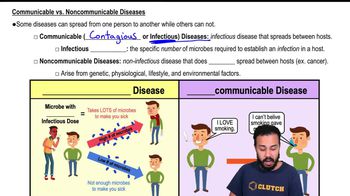
Communicable vs. Noncommunicable Diseases

Common Routes of Infection

Infectious agents can enter the body through various routes including respiratory droplets, vectors (like insects), puncture wounds, animal bites, or contaminated water. Identifying the most plausible route depends on the environment, symptoms, and exposure history.
Recommended video:
Guided course
03:52
Map of Lesson on Bacteriophage Infections

Clinical Presentation and Epidemiology

Symptoms like fever and chills with a daily spike suggest a systemic infection possibly linked to occupational exposure. Recognizing patterns in symptom onset and affected populations helps narrow down the transmission mode and likely pathogens.
Recommended video:
Guided course
04:11
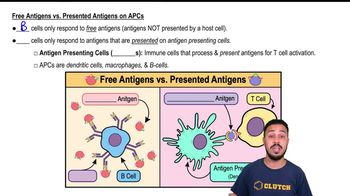
Free Antigens vs. Presented Antigens on APCs