Ch. 22 - Microbial Diseases of the Nervous System
Tortora - Microbiology: An Introduction 14th Edition
Tortora14th EditionMicrobiology: An IntroductionISBN: 9780138200398Not the one you use?Change textbook
Chapter 22, Problem 7a

On the following figure, identify the portal of entry of H. influenzae, C. tetani, botulinum toxin, M. leprae, poliovirus, Lyssavirus, arboviruses, and Acanthamoeba.
<IMAGE>

Verified step by step guidance
1
Step 1: Understand the concept of 'portal of entry' in microbiology, which refers to the site through which a pathogen enters the host to initiate infection. Common portals include respiratory tract, gastrointestinal tract, skin, mucous membranes, and parenteral routes (e.g., wounds).
Step 2: For each microorganism or toxin listed, recall or research their typical portal of entry based on their mode of transmission and infection pathway:
Step 3: Haemophilus influenzae typically enters through the respiratory tract, as it colonizes the nasopharynx and can cause respiratory infections.
Step 4: Clostridium tetani and botulinum toxin usually enter through parenteral routes such as wounds or contaminated punctures, since the bacteria or toxin gain access via damaged skin.
Step 5: Mycobacterium leprae enters primarily through the skin or respiratory tract, poliovirus through the gastrointestinal tract (fecal-oral route), Lyssavirus (rabies virus) through skin breaks from animal bites, arboviruses through insect bites (skin), and Acanthamoeba through the eye (corneal abrasions) or skin wounds.

Verified video answer for a similar problem:

This video solution was recommended by our tutors as helpful for the problem above.
Video duration:
1m
Was this helpful?

Key Concepts

Here are the essential concepts you must grasp in order to answer the question correctly.

Portal of Entry in Infectious Diseases

The portal of entry is the site through which a pathogen enters the host to initiate infection. Common portals include respiratory, gastrointestinal, skin, and mucous membranes. Understanding the portal of entry helps explain how different microbes infect specific tissues and cause disease.
Recommended video:
Guided course
05:09
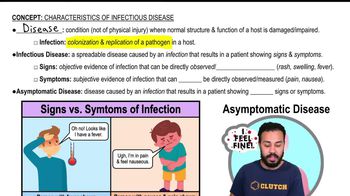
Intro to Characteristics of Infectious Disease

Pathogen-Specific Transmission and Infection Routes

Each pathogen has characteristic routes of transmission and preferred portals of entry, such as inhalation for respiratory pathogens or skin wounds for others. For example, H. influenzae typically enters via the respiratory tract, while C. tetani enters through wounds. Recognizing these routes is essential for identifying infection sources and prevention.
Recommended video:
Guided course
03:40
Introduction to Pathogenic Toxins

Microbial Diversity and Disease Mechanisms

Different microbes, including bacteria, viruses, and protozoa, have unique mechanisms to invade and survive in the host. For instance, botulinum toxin acts through ingestion, M. leprae infects via skin or respiratory routes, and arboviruses are transmitted by insect vectors. Understanding these differences aids in linking pathogens to their portals of entry.
Recommended video:
Guided course
01:59
Introduction to Avoiding Host Defense Mechanisms