Ch. 12 - The Eukaryotes: Fungi, Algae, Protozoa, and Helminths
Tortora - Microbiology: An Introduction 14th Edition
Tortora14th EditionMicrobiology: An IntroductionISBN: 9780138200398Not the one you use?Change textbook
Chapter 12, Problem 1

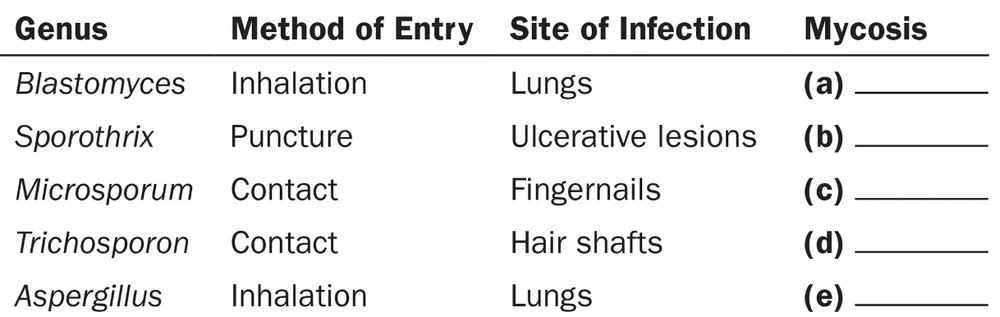
Following is a list of fungi, their methods of entry into the body, and sites of infections they cause. Categorize each type of mycosis as cutaneous, opportunistic, subcutaneous, superficial, or systemic.
Table listing fungi genus, their entry methods (inhalation, puncture, contact), infection sites, and blank mycosis categories to classify.

Verified step by step guidance
1
Step 1: Understand the definitions of each category of mycosis: Superficial mycoses affect the outermost layers of skin and hair; Cutaneous mycoses involve deeper layers of the epidermis, hair, and nails; Subcutaneous mycoses penetrate the dermis and subcutaneous tissues; Systemic mycoses affect internal organs and can spread through the bloodstream; Opportunistic mycoses occur mainly in immunocompromised individuals and can affect various tissues.
Step 2: Review the list of fungi provided, noting their typical methods of entry into the body (e.g., inhalation, trauma, direct contact) and the sites of infection they cause (e.g., skin, lungs, mucous membranes).
Step 3: For each fungus, match the site of infection and method of entry to the appropriate mycosis category based on the definitions. For example, fungi causing infections limited to hair or nails are usually cutaneous, while those entering via inhalation and causing lung infections are systemic.
Step 4: Pay special attention to fungi that cause infections primarily in immunocompromised hosts; these should be classified as opportunistic mycoses regardless of the site of infection.
Step 5: Organize the fungi into the five categories (cutaneous, opportunistic, subcutaneous, superficial, systemic) by listing each fungus under the category that best fits its infection characteristics and mode of entry.

Verified video answer for a similar problem:

This video solution was recommended by our tutors as helpful for the problem above.
Video duration:
2m
Was this helpful?

Key Concepts

Here are the essential concepts you must grasp in order to answer the question correctly.

Types of Mycoses

Mycoses are fungal infections classified based on the depth and location of infection: superficial affect the outermost skin layers; cutaneous involve keratinized tissues like hair and nails; subcutaneous penetrate deeper skin layers; systemic affect internal organs; and opportunistic occur in immunocompromised hosts. Understanding these categories helps in identifying the infection type.
Recommended video:
Guided course
01:06
Types of Phosphorylation

Fungal Entry Routes

Fungi can enter the body through various routes such as inhalation of spores, direct skin contact, trauma, or mucosal surfaces. The mode of entry often determines the infection site and type, for example, inhaled spores may cause systemic infections, while skin contact typically leads to cutaneous or superficial mycoses.
Recommended video:
Guided course
02:29
Entry & Uncoating by Endocytosis

Host Immune Status and Opportunistic Infections

Opportunistic mycoses occur primarily in individuals with weakened immune systems, such as those with HIV/AIDS or undergoing immunosuppressive therapy. These fungi are usually harmless in healthy hosts but can cause severe systemic infections when immunity is compromised, highlighting the importance of host factors in fungal disease.
Recommended video:
Guided course
03:22
Adaptive Immunity Can Damage the Host