
Ch. 18 - Nervous System Infections
Norman-McKay- Microbiology: Basic and Clinical Principles 2nd Edition
Norman-McKay2nd EditionMicrobiology: Basic and Clinical PrinciplesISBN: 9780137661619Not the one you use?Change textbook
Chapter 18, Problem 12

Which of the following symptoms would be most informative in terms of ruling out a prion disease as a differential diagnosis?
a. Nuchal rigidity
b. Hallucinations
c. Fatigue
d. Headache

Verified step by step guidance
1
Step 1: Understand what prion diseases are. Prion diseases are a group of progressive neurodegenerative disorders caused by misfolded prion proteins, leading to brain damage and characteristic neurological symptoms.
Step 2: Review common symptoms of prion diseases. These often include rapidly progressive dementia, myoclonus (involuntary muscle jerks), ataxia (loss of coordination), and sometimes psychiatric symptoms like hallucinations.
Step 3: Analyze each symptom option in the context of prion diseases: Nuchal rigidity (neck stiffness) is typically associated with meningitis or other infections, not prion diseases; hallucinations can occur in prion diseases; fatigue is a nonspecific symptom and can be present in many conditions including prion diseases; headache is also nonspecific but less characteristic of prion diseases.
Step 4: Determine which symptom is least likely to be associated with prion diseases and therefore most useful in ruling them out. Since nuchal rigidity is not a typical feature of prion diseases but is common in other neurological infections, its presence would suggest an alternative diagnosis.
Step 5: Conclude that identifying nuchal rigidity would be most informative in ruling out prion disease as it points toward other causes such as meningitis rather than prion pathology.

Verified video answer for a similar problem:

This video solution was recommended by our tutors as helpful for the problem above.
Video duration:
1m
Was this helpful?

Key Concepts

Here are the essential concepts you must grasp in order to answer the question correctly.

Prion Disease Characteristics

Prion diseases are rare, fatal neurodegenerative disorders caused by misfolded prion proteins. They typically present with rapidly progressive dementia, motor dysfunction, and neurological symptoms like myoclonus, but not usually with symptoms like nuchal rigidity or common systemic complaints.
Recommended video:
Guided course
05:09
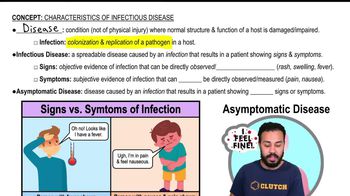
Intro to Characteristics of Infectious Disease

Nuchal Rigidity and Its Clinical Significance

Nuchal rigidity refers to neck stiffness often associated with meningeal irritation, commonly seen in meningitis or subarachnoid hemorrhage. It is not a typical feature of prion diseases, making its presence useful in ruling out prion disease in differential diagnosis.
Recommended video:
Guided course
01:58
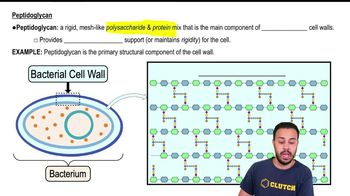
Peptidoglycan

Differential Diagnosis in Neurology

Differential diagnosis involves distinguishing between diseases with overlapping symptoms by identifying unique or absent features. Recognizing which symptoms are inconsistent with prion diseases helps clinicians exclude them and consider alternative diagnoses.
Recommended video:
Guided course
03:27
Differential Staining