Ch. 15 - Antimicrobial Drugs
Norman-McKay- Microbiology: Basic and Clinical Principles 2nd Edition
Norman-McKay2nd EditionMicrobiology: Basic and Clinical PrinciplesISBN: 9780137661619Not the one you use?Change textbook
Chapter 15, Problem 16

Choose the false statement(s). Select all that apply.
a. Antifungal drugs may target cholesterol in fungal cell membranes.
b. Azole and polyene drugs promote cell lysis by impacting fungal cell plasma membranes.
c. Echinocandin drugs inhibit fungal cell wall synthesis.
d. Antifungal drugs may target DNA replication.
e. Antifungal drugs may target protein synthesis.

Verified step by step guidance
1
Step 1: Understand the target structures and processes of antifungal drugs. Antifungal drugs typically target components unique to fungi, such as ergosterol in the fungal cell membrane or the fungal cell wall, which contains glucans and chitin.
Step 2: Evaluate statement (a). Cholesterol is a component of animal cell membranes, while fungi have ergosterol instead. Therefore, antifungal drugs target ergosterol, not cholesterol, in fungal membranes. This suggests statement (a) is false.
Step 3: Evaluate statement (b). Azoles inhibit ergosterol synthesis, and polyenes bind to ergosterol, disrupting fungal plasma membranes and causing cell lysis. This is a true statement.
Step 4: Evaluate statement (c). Echinocandins inhibit the synthesis of β-glucan, an essential component of the fungal cell wall, making this statement true.
Step 5: Evaluate statements (d) and (e). Antifungal drugs generally do not target DNA replication or protein synthesis directly, as these processes are similar in fungi and human cells, making selective targeting difficult. Therefore, these statements are false.

Verified video answer for a similar problem:

This video solution was recommended by our tutors as helpful for the problem above.
Video duration:
1m
Was this helpful?

Key Concepts

Here are the essential concepts you must grasp in order to answer the question correctly.

Fungal Cell Membrane Composition

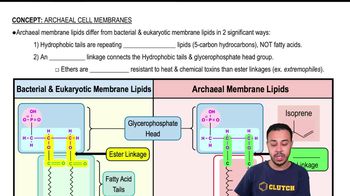
Fungal cell membranes contain ergosterol, not cholesterol, which is a key target for many antifungal drugs. Drugs like azoles and polyenes disrupt ergosterol synthesis or bind to ergosterol, compromising membrane integrity and causing cell death.
Recommended video:
Guided course
03:59
Archaeal Cell Membranes

Mechanism of Action of Antifungal Drug Classes

Azoles inhibit ergosterol synthesis, polyenes bind ergosterol causing membrane pores, and echinocandins inhibit β-glucan synthesis in the fungal cell wall. These mechanisms disrupt essential fungal structures, leading to cell lysis or growth inhibition.
Recommended video:

Targets of Antifungal Drugs Beyond Membranes and Cell Walls

Unlike some antibacterial agents, most antifungal drugs do not target DNA replication or protein synthesis. Their primary targets are fungal-specific components like ergosterol and cell wall glucans, making statements about DNA or protein synthesis targeting generally false.
Recommended video:
Guided course
02:44
Types of Bacterial Cell Walls