Ch. 1 - Introduction to Microbiology
Norman-McKay- Microbiology: Basic and Clinical Principles 2nd Edition
Norman-McKay2nd EditionMicrobiology: Basic and Clinical PrinciplesISBN: 9780137661619Not the one you use?Change textbook
Chapter 1, Problem 2

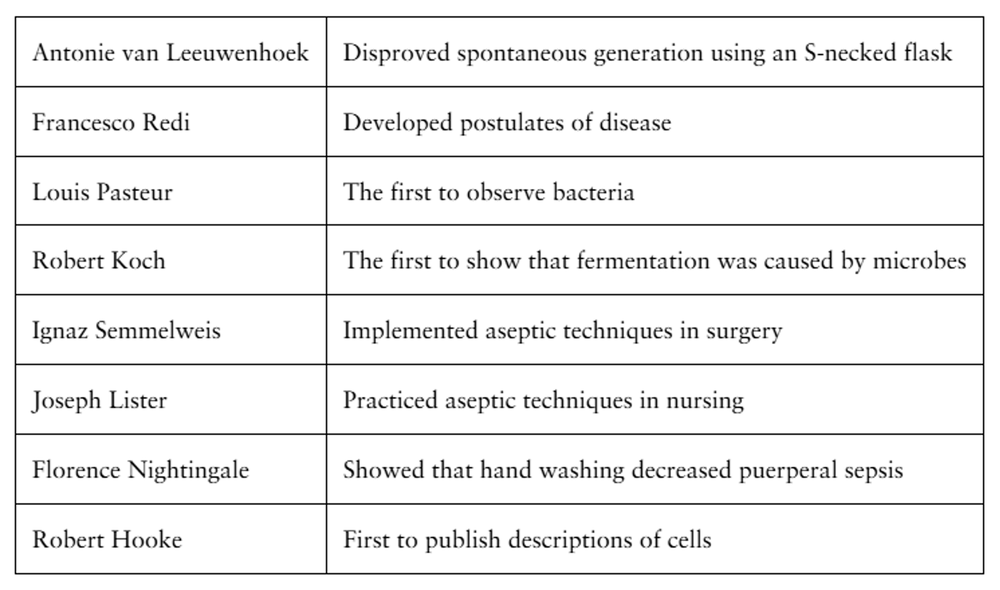
Match the following people to their scientific/medical contribution:
Note: Choices may be used more than once or not at all.
Table matching historical figures to their key scientific or medical contributions in microbiology and aseptic techniques.

Verified step by step guidance
1
Step 1: Identify the list of people provided in the problem and the corresponding scientific or medical contributions that need to be matched.
Step 2: Review the key discoveries or contributions associated with each person. For example, recall who discovered penicillin, who developed the germ theory of disease, or who pioneered vaccination.
Step 3: Use your knowledge of microbiology history to link each individual to their known contribution. For instance, Alexander Fleming is known for discovering penicillin.
Step 4: Cross-check each match to ensure it aligns with well-established scientific facts and avoid assigning the same contribution to multiple people unless the problem allows it.
Step 5: Finalize your matches by writing down each person alongside their correct scientific or medical contribution, ensuring clarity and accuracy.

Verified video answer for a similar problem:

This video solution was recommended by our tutors as helpful for the problem above.
Video duration:
2m
Was this helpful?

Key Concepts

Here are the essential concepts you must grasp in order to answer the question correctly.

Historical Contributions in Microbiology and Medicine

Understanding the key figures in microbiology and medicine involves recognizing their major discoveries or inventions, such as Pasteur's work on germ theory or Fleming's discovery of penicillin. This knowledge helps link scientists to their contributions and appreciate the development of medical science.
Recommended video:
Guided course
07:27
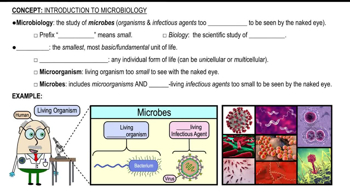
Introduction to Microbiology

Germ Theory of Disease

The germ theory states that microorganisms are the cause of many diseases. This concept revolutionized medicine by shifting focus to identifying pathogens and developing treatments, and it is central to many scientists' contributions in microbiology.
Recommended video:
Guided course
06:58
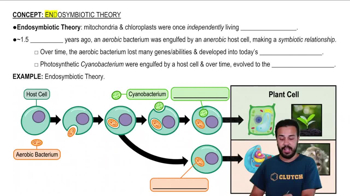
Endosymbiotic Theory

Antibiotics and Vaccination

Antibiotics are drugs that kill or inhibit bacteria, while vaccines stimulate the immune system to prevent infections. Recognizing which scientists contributed to these advances, such as Fleming for antibiotics and Jenner for vaccines, is essential for matching names to their discoveries.
Recommended video:
Guided course
02:30
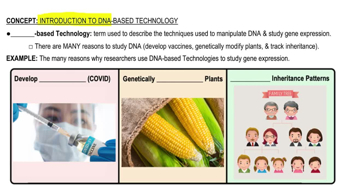
Introduction to DNA-Based Technology