Ch. 27 - Microbial Ecology and Microbiomes
Bauman - Microbiology with Diseases by Taxonomy 6th Edition
Bauman6th EditionMicrobiology with Diseases by TaxonomyISBN: 9780134832302Not the one you use?Change textbook
Chapter 27, Problem 9

Of the following characteristics, which would contribute most to making a microorganism an effective biological warfare agent?
a. Is readily available in the environment
b. Can be spread by contact after original dissemination
c. Cannot be treated well outside a hospital
d. Is easily identified by symptoms

Verified step by step guidance
1
Step 1: Understand the context of the question, which is about identifying characteristics that make a microorganism an effective biological warfare agent. Consider factors that would enhance its spread, persistence, and difficulty to control.
Step 2: Analyze option (a) 'Is readily available in the environment' — while availability is important, it alone does not ensure effective spread or impact as a warfare agent.
Step 3: Analyze option (b) 'Can be spread by contact after original dissemination' — this characteristic allows the microorganism to continue spreading beyond the initial release, increasing its potential impact and making it more effective as a biological weapon.
Step 4: Analyze option (c) 'Cannot be treated well outside a hospital' — this implies difficulty in treatment, which is important, but if the microorganism cannot spread easily, its impact is limited.
Step 5: Analyze option (d) 'Is easily identified by symptoms' — easy identification would actually reduce its effectiveness as a warfare agent because it allows for quicker diagnosis and response.

Verified video answer for a similar problem:

This video solution was recommended by our tutors as helpful for the problem above.
Video duration:
2m
Was this helpful?

Key Concepts

Here are the essential concepts you must grasp in order to answer the question correctly.

Pathogenicity and Transmission

Pathogenicity refers to a microorganism's ability to cause disease, while transmission describes how it spreads between hosts. Effective biological agents often spread easily, especially through contact or airborne routes, increasing their impact and making containment difficult.
Recommended video:
Guided course
03:40
Introduction to Pathogenic Toxins

Environmental Availability and Stability

Microorganisms that are readily available or can survive well in the environment are easier to obtain and deploy as biological agents. Environmental stability ensures the agent remains infectious during dissemination and until it reaches a host.
Recommended video:
Guided course
07:21
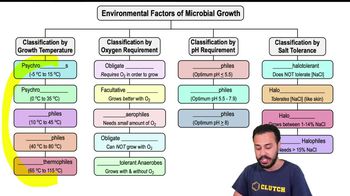
Reviewing the Environmental Factors of Microbial Growth

Detectability and Treatment Challenges

An effective biological agent may be hard to detect early due to nonspecific symptoms, delaying diagnosis. Additionally, resistance to treatment or limited therapeutic options outside specialized care increases its threat by complicating medical response.
Recommended video:
Guided course
06:49
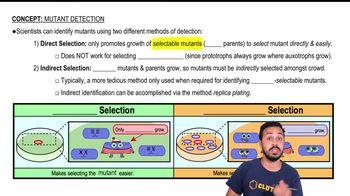
Mutant Detection