Ch. 24 - Pathogenic DNA Viruses
Bauman - Microbiology with Diseases by Taxonomy 6th Edition
Bauman6th EditionMicrobiology with Diseases by TaxonomyISBN: 9780134832302Not the one you use?Change textbook
Chapter 24, Problem 2

For which of the following reasons are most animal poxviruses unable to infect humans?
a. Affected animals are not in frequent contact with humans.
b. The human immune system makes it impossible for the foreign viral particles to
reproduce effectively.
c. Attachment to human cells is unlikely.
d. Human cells lack the necessary enzymes for infection.

Verified step by step guidance
1
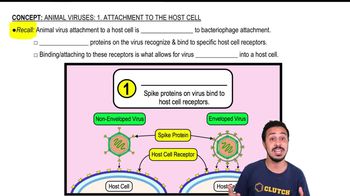
Understand that viral infection begins with the virus attaching to specific receptors on the host cell surface. This attachment is highly specific and determines host range.
Recognize that poxviruses have evolved to bind to receptors present on their usual animal hosts' cells, which may differ from those on human cells.
Consider that if the virus cannot attach effectively to human cell receptors, it cannot enter the cells to initiate infection.
Evaluate the other options: while immune response and enzyme availability are important, the primary barrier for cross-species infection is often the inability to attach to host cells.
Conclude that the most critical reason most animal poxviruses cannot infect humans is due to the unlikelihood of attachment to human cells.

Verified video answer for a similar problem:

This video solution was recommended by our tutors as helpful for the problem above.
Video duration:
3m
Was this helpful?

Key Concepts

Here are the essential concepts you must grasp in order to answer the question correctly.

Virus-Host Specificity and Attachment

Viruses infect hosts by attaching to specific receptors on the host cell surface. This attachment is highly specific, meaning that if a virus cannot bind to receptors on human cells, it cannot initiate infection. Poxviruses often have evolved to recognize receptors unique to their animal hosts, limiting cross-species infection.
Recommended video:
Guided course
03:12
Animal Viruses: 1. Attachment to the Host Cell

Host Immune Response to Viral Infection

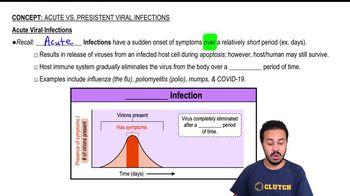
The human immune system can recognize and neutralize foreign viruses, preventing their replication. However, immune defense usually acts after viral entry, so inability to infect is more often due to initial attachment failure rather than immune clearance. Immune response is crucial but not the primary barrier for many zoonotic viruses.
Recommended video:
Guided course
03:29
Acute Viral Infections

Viral Replication Requirements in Host Cells

Viruses rely on host cell machinery and enzymes to replicate. If human cells lack specific enzymes or factors required by an animal virus, replication cannot proceed. However, many poxviruses carry their own replication enzymes, making this less commonly the limiting factor for infection in humans.
Recommended video:
Guided course
01:50
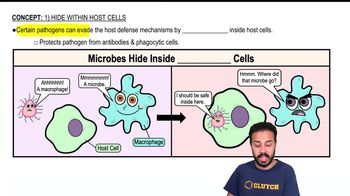
Hide Within Host Cells