
Ch. 20 - Pathogenic Gram-Negative Cocci and Bacilli
Bauman - Microbiology with Diseases by Taxonomy 6th Edition
Bauman6th EditionMicrobiology with Diseases by TaxonomyISBN: 9780134832302Not the one you use?Change textbook
Chapter 20, Problem 1

A physician prescribes fluid replacement to treat a patient with diarrhea. Although tests showed that a pathogenic enteric bacterium was the cause of the intestinal distress, an antimicrobial drug was not prescribed; why not?

Verified step by step guidance
1
Understand the context: The patient has diarrhea caused by a pathogenic enteric bacterium, which means the infection is in the intestines.
Recall that many cases of bacterial diarrhea are self-limiting, meaning they resolve on their own without the need for antibiotics.
Consider that antimicrobial drugs can disrupt the normal gut microbiota, potentially worsening the condition or leading to antibiotic resistance.
Recognize that fluid replacement is the primary treatment to prevent dehydration, which is the most immediate risk in diarrheal diseases.
Conclude that the physician likely avoided prescribing antimicrobials to prevent unnecessary side effects and resistance, focusing instead on supportive care with fluids.

Verified video answer for a similar problem:

This video solution was recommended by our tutors as helpful for the problem above.
Video duration:
2m
Was this helpful?

Key Concepts

Here are the essential concepts you must grasp in order to answer the question correctly.

Pathophysiology of Diarrhea

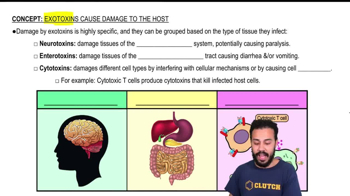
Diarrhea often results from the disruption of normal intestinal fluid absorption and secretion caused by enteric pathogens. Many bacteria cause diarrhea by producing toxins that alter ion transport, leading to fluid loss without necessarily requiring bacterial eradication for symptom resolution.
Recommended video:
Guided course
03:30
Types of Exotoxins

Role of Fluid Replacement Therapy

Fluid replacement is critical in treating diarrhea to prevent dehydration and electrolyte imbalance. Oral or intravenous rehydration restores lost fluids and salts, addressing the primary danger of diarrhea, often without needing to eliminate the causative bacteria immediately.
Recommended video:
Guided course
02:39
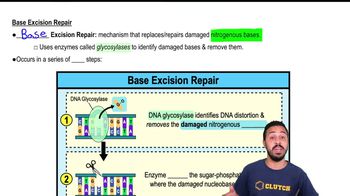
Base Excision Repair

Antimicrobial Use and Resistance Considerations

Antimicrobial drugs are not always prescribed for enteric infections because many diarrheal illnesses are self-limiting, and unnecessary antibiotic use can promote resistance. Additionally, some bacterial toxins cause symptoms even after bacteria are cleared, so antibiotics may not improve outcomes.
Recommended video:
Guided course
02:43
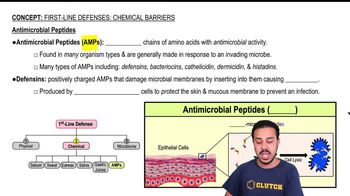
Antimicrobial Peptides