Back

Review of Prokaryotic Surface Structures definitions

Control buttons has been changed to "navigation" mode.
1/15
  • Glycocalyx

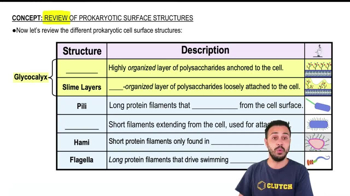
    Sticky, gel-like polysaccharide layer surrounding cells, providing protection and aiding in surface attachment.
  • Capsule

    Highly organized, tightly anchored polysaccharide layer offering robust protection and enhanced adherence.
  • Slime Layer

    Loosely attached, less organized polysaccharide coating that aids in surface adherence and environmental resilience.
  • Pili

    Long protein filaments extending from the cell, enabling motility and facilitating DNA transfer between cells.
  • Fimbriae

    Short, numerous filaments on the cell surface, crucial for attachment and biofilm formation.
  • Hammy

    Short, archaeal-specific protein filaments acting as grappling hooks for strong adhesion to surfaces or other cells.
  • Flagella

    Long, whip-like protein structures responsible for swimming motility via rotational movement.
  • Biofilm

    Community of microbes embedded in an extracellular polymeric substance, often formed through surface attachment.
  • Twitching Motility

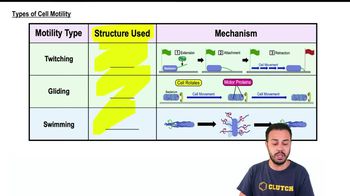
    Type of movement involving extension and retraction of pili, resulting in jerky, dragging cell motion.
  • Gliding Motility

    Smooth surface movement using pili and motor proteins, with a mechanism not fully understood.
  • Swimming Motility

    Movement powered by flagella rotation, characterized by alternating runs and tumbles for directional changes.
  • Sex Pilus

    Specialized pilus facilitating direct DNA transfer between bacterial cells during conjugation.
  • Extracellular Polymeric Substance

    Matrix produced by microbes in biofilms, providing structural stability and protection.
  • Run

    Straight, smooth movement phase during swimming motility, driven by flagella rotation in one direction.
  • Tumble

    Brief, randomizing movement phase during swimming motility, allowing cells to change direction.