Back

Review of Adaptive Immunity definitions

Control buttons has been changed to "navigation" mode.
1/15
  • Adaptive Immunity

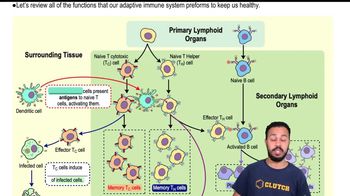
    Defense system with memory and specificity, enabling rapid and targeted responses to previously encountered antigens.
  • T Cell

    Lymphocyte maturing in the thymus, crucial for recognizing antigens presented on MHC molecules and orchestrating cellular immune responses.
  • B Cell

    Lymphocyte maturing in bone marrow, responsible for producing antibodies and presenting antigens to helper T cells.
  • Primary Lymphoid Organs

    Sites where lymphocytes mature and develop, including the thymus and bone marrow.
  • Secondary Lymphoid Organs

    Locations such as lymph nodes where mature lymphocytes encounter antigens and become activated.
  • Naive State

    Inactive condition of lymphocytes before encountering their specific antigen.
  • Antigen Presenting Cell

    Cell type, such as a dendritic cell, that displays processed antigens on MHC molecules to activate T cells.
  • MHC Class I

    Molecule presenting antigens to cytotoxic T cells, enabling detection of infected or abnormal cells.
  • MHC Class II

    Molecule presenting antigens to helper T cells, essential for initiating immune responses.
  • Cytotoxic T Cell

    Effector lymphocyte that induces apoptosis in cells infected with intracellular pathogens.
  • Helper T Cell

    Effector lymphocyte that activates other immune cells, including B cells and macrophages, via cytokine release.
  • Memory Cell

    Long-lived lymphocyte residing in secondary lymphoid organs, enabling faster and stronger responses to repeated antigen exposure.
  • Plasma Cell

    Differentiated B cell specialized in secreting large quantities of antibodies during immune responses.
  • Antibody

    Protein produced by plasma cells that binds specific antigens, tagging pathogens for elimination.
  • Cytokine

    Signaling molecule released by immune cells to coordinate and enhance immune responses.