Back

Physical Barriers in First-Line Defenses: Skin definitions

Control buttons has been changed to "navigation" mode.
1/14
  • Skin

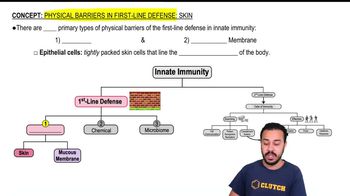
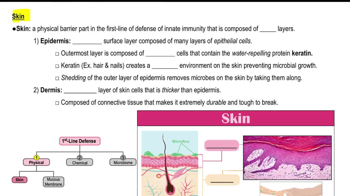
    A multi-layered structure forming a tough, dry barrier that prevents microbial entry as part of innate immunity.
  • Physical Barrier

    A structural defense that blocks pathogens from entering the body, forming the first line of innate immunity.
  • First Line Defense

    The initial protective mechanisms, including skin and mucous membranes, that prevent pathogen invasion.
  • Innate Immunity

    A non-specific, immediate defense system present from birth, providing broad protection against pathogens.
  • Epidermis

    The outermost skin layer, made of multiple layers of epithelial cells, with a surface of dead, keratin-rich cells.
  • Dermis

    A thick, inner skin layer composed of durable connective tissue, providing strength and resistance to penetration.
  • Epithelial Cells

    Tightly packed cells forming the surface of the skin, creating a continuous barrier against microbes.
  • Keratin

    A water-repelling protein in dead skin cells that creates a dry surface, limiting microbial growth.
  • Shedding

    The process where the outermost skin layer is regularly sloughed off, removing attached microbes.
  • Connective Tissue

    A tough, supportive tissue in the dermis that enhances skin durability and prevents microbial penetration.
  • Subcutaneous Layer

    A layer beneath the dermis containing fat tissue and blood vessels, adding extra protection.
  • Microbial Growth

    The increase in number of microorganisms, which is limited on skin by dryness and shedding.
  • Dry Environment

    A condition on the skin surface, maintained by keratin, that inhibits many microbes.
  • Mucous Membranes

    Moist linings of body passages that, along with skin, act as physical barriers in innate immunity.