Back

Overview of Prokaryotic Cell Structure definitions

Control buttons has been changed to "navigation" mode.
1/13
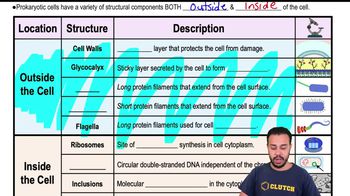
  • Cell Wall

    Outer layer providing protection from damage, visually depicted as a blue background in cell diagrams.
  • Glycocalyx

    Sticky external layer composed of polysaccharides and proteins, enabling microbes to form biofilms.
  • Pili

    Long protein filaments extending from the cell surface, primarily involved in attachment rather than movement.
  • Cilia

    Short protein filaments projecting from the cell surface, crucial for cellular movement.
  • Flagella

    Long protein filaments specialized for cell movement, distinct from pili by their motility function.
  • Plasma Membrane

    Boundary layer beneath the cell wall, previously discussed as a key structural component.
  • Ribosomes

    Sites of protein synthesis within the cytoplasm, serving as the location for translation.
  • Plasmids

    Circular, double-stranded DNA molecules independent of the main chromosome, often depicted in green.
  • Inclusions

    Cytoplasmic vesicles acting as containers for important cellular contents.
  • Endospores

    Dormant, heat-resistant cell types capable of surviving damaging conditions.
  • Biofilms

    Microbial communities adhering together, facilitated by the sticky external layer.
  • Cytoplasm

    Internal fluid matrix where structures like ribosomes and inclusions are located.
  • Chromosome

    Main DNA molecule of the cell, distinct from smaller, circular genetic elements.