Gastroenteritis refers to inflammation of the stomach and intestines, specifically the gastrointestinal lining.
How does infection differ from intoxication in causing gastroenteritis?
Infection involves ingesting live microbes that reproduce in the digestive tract, while intoxication results from ingesting toxins produced by bacteria.
Why do symptoms of infection develop more slowly than those of intoxication?
Symptoms of infection develop slowly because microbes need time to establish and reproduce, whereas intoxication symptoms appear rapidly since the toxin is already present.
What is the common colloquial term for gastroenteritis?
The common colloquial term for gastroenteritis is 'food poisoning.'
What are the main symptoms of gastroenteritis?
The main symptoms include vomiting, diarrhea, cramping, and sometimes fever.
What is dysentery and how does it differ from regular diarrhea?
Dysentery is severe diarrhea that contains blood and mucus, unlike regular diarrhea which is just loose, watery stool.
Why can vomiting and diarrhea be considered beneficial physiological responses?
They help expel pathogens from the body quickly, reducing the chance of further infection.
How can vomiting and diarrhea contribute to the spread of disease?
They can spread pathogens through fecal-oral transmission, especially in areas with poor sanitation.
Why is dehydration a serious concern in cases of gastroenteritis?
Dehydration can be fatal, particularly in children and in cases of dysentery, due to excessive fluid loss.
What role does cramping play in gastroenteritis?
Cramping is caused by inflammation or muscle spasms in the intestines, often as the body tries to expel pathogens quickly.
Which symptom is more commonly associated with infection rather than intoxication?
Fever is more commonly associated with infection and is rare in cases of intoxication.
What is the primary function of fever and inflammation during gastroenteritis?
Fever and inflammation are part of the immune response, aiming to kill or inhibit pathogens.
How can foodborne pathogens be transmitted to others?
They can be transmitted via the fecal-oral route, often through contaminated food or water.
Why is good sanitation important in preventing gastroenteritis?
Good sanitation helps prevent the spread of pathogens that cause gastroenteritis, especially through fecal-oral transmission.
What is the evolutionary advantage for microbes in causing diarrhea?
Diarrhea helps microbes spread more easily to new hosts, increasing their chances of transmission.
 Back
Back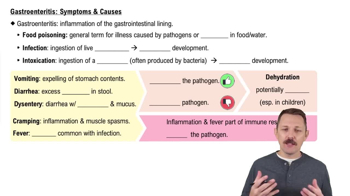
 05:34
05:34