Skip to main content
Microbiology
My Course
Learn
Exam Prep
AI Tutor
Study Guides
Textbook Solutions
Flashcards
Explore
Try the app
My Course
Learn
Exam Prep
AI Tutor
Study Guides
Textbook Solutions
Flashcards
Explore
Try the app
Back
Overview of Diseases of the Digestive System definitions
You can tap to flip the card.
Gastroenteritis
You can tap to flip the card.
👆
Gastroenteritis
Inflammation of the stomach and intestines, often resulting in symptoms like vomiting and diarrhea due to infection or toxins.
Track progress
Control buttons has been changed to "navigation" mode.
1/15
Related flashcards
Related practice
Recommended videos
Overview of Diseases of the Digestive System quiz
Overview of Diseases of the Digestive System
15 Terms
Overview of Diseases of the Digestive System
31. Microbial Infections - Digestive System
5 problems
Topic
Hepatitis
31. Microbial Infections - Digestive System
5 problems
Topic
31. Microbial Infections - Digestive System
5 topics
12 problems
Chapter
05:34
Gastroenteritis: Symptoms & Causes
Terms in this set (15)
Hide definitions
Gastroenteritis
Inflammation of the stomach and intestines, often resulting in symptoms like vomiting and diarrhea due to infection or toxins.
Infection
Illness caused by live microbes reproducing in the digestive tract, typically developing symptoms more slowly.
Intoxication
Rapid-onset illness from ingesting toxins, often bacterial, without the need for live microbes to establish in the body.
Diarrhea
Loose, watery stool with urgency, serving to expel pathogens but risking dehydration and facilitating transmission.
Dysentery
Severe diarrhea containing blood and mucus, often linked to specific pathogens and higher risk of fatal dehydration.
Vomiting
Expulsion of stomach contents, acting as a defense to remove pathogens but also increasing risk of spreading them.
Dehydration
Loss of body fluids, potentially fatal, especially in children, due to excessive vomiting or diarrhea.
Cramping
Painful muscle spasms in the intestines, often resulting from inflammation or rapid movement of contents.
Fever
Elevated body temperature, commonly seen with infection, reflecting the immune system's effort to combat pathogens.
Pathogen
Microorganism capable of causing disease, often responsible for symptoms like vomiting and diarrhea in the digestive tract.
Toxin
Harmful substance produced by bacteria, capable of causing illness even after the bacteria are destroyed.
Fecal-oral transmission
Spread of microbes from contaminated stool to mouth, often facilitated by poor sanitation and leading to digestive diseases.
Sanitation
Practices that prevent disease spread by reducing contamination, crucial for controlling foodborne and waterborne illnesses.
Immune response
Body's defense mechanism, causing inflammation, fever, and other symptoms to eliminate invading pathogens.
Food poisoning
General term for illness from consuming contaminated food or water, caused by pathogens or their toxins.
 BackBack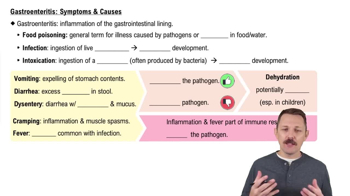
 05:34
05:34