Back

Outcomes of Antibody Binding to Antigen definitions

Control buttons has been changed to "navigation" mode.
1/15
  • Opsonization

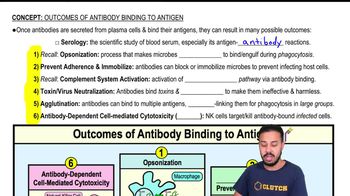
    Process enhancing phagocytosis by making microbes easier for phagocytes like macrophages to bind and engulf.
  • Phagocytosis

    Engulfment and digestion of microbes by immune cells, often facilitated by antibody binding.
  • Macrophage

    Type of phagocyte that engulfs and digests pathogens, especially after antibody tagging.
  • Complement System

    Cascade of proteins activated via the classical pathway by antibody-antigen complexes, leading to inflammation and cell lysis.
  • Classical Pathway

    Route of complement activation initiated by antibody-antigen binding, resulting in immune defense actions.
  • Agglutination

    Clumping of antigens by antibodies cross-linking multiple targets, making pathogens easier to eliminate.
  • Cross Linking

    Connection of multiple antigens by a single antibody, resulting in aggregation of pathogens.
  • Neutralization

    Inactivation of toxins or viruses by antibodies, rendering them ineffective and harmless.
  • Antibody-Dependent Cell-Mediated Cytotoxicity

    Mechanism where natural killer cells target and kill antibody-coated infected host cells, promoting apoptosis.
  • Natural Killer Cell

    Immune cell that recognizes antibody-tagged infected cells and induces their programmed cell death.
  • Apoptosis

    Programmed cell death triggered in infected cells, often by immune mechanisms like ADCC.
  • Serology

    Scientific study of blood serum, focusing on antigen-antibody interactions.
  • Plasma Cell

    Immune cell responsible for secreting antibodies specific to antigens.
  • Antigen

    Molecule recognized by antibodies, often found on pathogens and targeted for immune response.
  • Immunity

    Protection against pathogens achieved through various antibody-mediated mechanisms.