Back

Mitosis & Meiosis definitions

Control buttons has been changed to "navigation" mode.
1/15
  • Mitosis

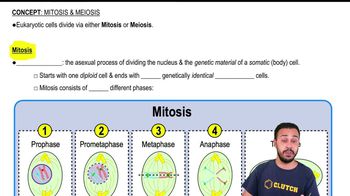
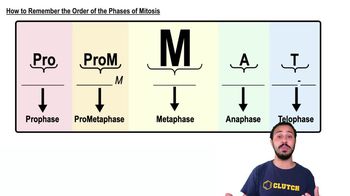
    A process in eukaryotic cells where the nucleus divides, producing two genetically identical diploid cells through five distinct phases.
  • Meiosis

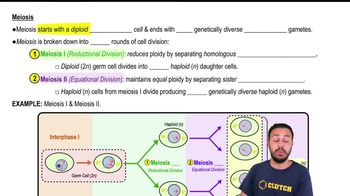
    A two-stage division in germ cells resulting in four genetically diverse haploid gametes, essential for sexual reproduction.
  • Diploid Cell

    A cell containing two complete sets of chromosomes, typically found in somatic and germ cells before division.
  • Haploid Cell

    A cell with only one set of chromosomes, produced during meiosis and found in gametes like sperm and eggs.
  • Somatic Cell

    Any body cell except gametes, undergoing mitosis to produce genetically identical offspring cells.
  • Germ Cell

    A precursor cell in sexual organisms that undergoes meiosis to form gametes.
  • Gamete

    A sex cell, such as sperm or egg, carrying half the chromosome number and formed through meiosis.
  • Chromosome

    A structure of tightly coiled DNA and proteins, visible during cell division and carrying genetic information.
  • Sister Chromatid

    One of two identical DNA strands joined at a centromere, separated during mitosis and meiosis II.
  • Homologous Chromosome

    A pair of chromosomes, one from each parent, that are separated during meiosis I to ensure genetic diversity.
  • Mitotic Spindle

    A structure of microtubules that organizes and separates chromosomes during mitosis and meiosis.
  • Cytokinesis

    The division of the cytoplasm following nuclear division, resulting in two or four separate cells.
  • Prophase

    The mitosis phase where chromatin condenses into visible chromosomes and the mitotic spindle begins to form.
  • Metaphase

    The mitosis phase where chromosomes align in a single row at the cell's center, preparing for separation.
  • Anaphase

    The mitosis phase where sister chromatids are pulled apart to opposite poles, ensuring equal DNA distribution.