Back

Liquid Chemicals: Alcohols, Aldehydes, & Biguanides definitions

Control buttons has been changed to "navigation" mode.
1/15
  • Alcohols

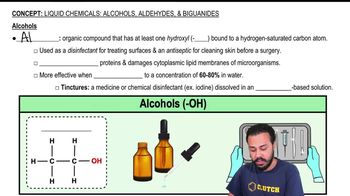
    Organic compounds with at least one hydroxyl group, used as disinfectants and antiseptics by denaturing proteins and damaging lipid membranes.
  • Hydroxyl Group

    A functional group consisting of an oxygen and hydrogen atom, responsible for the chemical properties of alcohols.
  • Disinfectant

    A chemical agent applied to nonliving surfaces to eliminate most microorganisms, often used in healthcare and laboratory settings.
  • Antiseptic

    A disinfectant safe for use on living tissues, such as skin, to reduce the risk of infection during procedures.
  • Ethanol

    A widely used alcohol in labs and hospitals for disinfecting surfaces and skin, especially before surgeries.
  • Tincture

    A solution where a medicinal substance, like iodine, is dissolved in an alcohol-based liquid for enhanced antimicrobial action.
  • Aldehydes

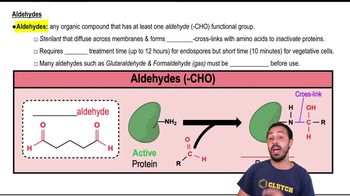
    Organic compounds with an aldehyde functional group, used as sterilants by forming amide cross-links with proteins.
  • Aldehyde Functional Group

    A chemical group at the end of a molecule, consisting of carbon, hydrogen, and oxygen, key to aldehyde reactivity.
  • Sterilant

    A chemical agent capable of destroying all forms of microbial life, except prions, often requiring extended exposure.
  • Amide Cross-Link

    A chemical bond formed between an aldehyde and amino acids on proteins, leading to protein inactivation.
  • Glutaraldehyde

    A potent aldehyde with two functional groups, used as a sterilant by inactivating proteins through cross-linking.
  • Formaldehyde

    A gaseous aldehyde used as a sterilant, requiring dilution before application to inactivate microbial proteins.
  • Biguanides

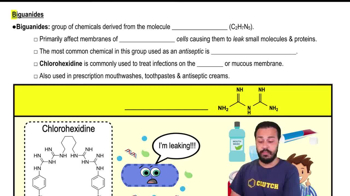
    A group of chemicals derived from biguanide, primarily disrupting membranes of vegetative cells and causing leakage.
  • Chlorohexidine

    A common biguanide used as an antiseptic in skin treatments, mouthwashes, and creams to control microbial growth.
  • Vegetative Cells

    Actively growing microbial cells susceptible to membrane disruption by agents like biguanides, leading to leakage.