Back

Introduction to Epidemiology definitions

Control buttons has been changed to "navigation" mode.
1/15
  • Epidemiology

    Field focused on the distribution, patterns, and determinants of health and disease in human populations.
  • Public Health

    Discipline dedicated to protecting and improving the health of entire populations through organized efforts.
  • Etiology

    Study of the origin or cause of a disease, including factors like microbes, toxins, or genetic mutations.
  • Centers for Disease Control and Prevention

    National agency in the USA responsible for disease prevention and health promotion.
  • World Health Organization

    International agency coordinating global health efforts and disease prevention.
  • Sporadic Disease

    Condition appearing only occasionally in scattered, unpredictable patterns within a population.
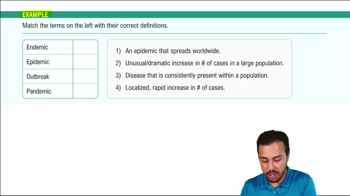
  • Endemic

    Condition consistently present in a population, showing a regular and predictable pattern.
  • Epidemic

    Occurrence of an unusually high number of cases of a disease within a population.
  • Pandemic

    Global outbreak of a disease affecting populations across multiple countries or continents.
  • Outbreak

    Brief, localized increase in disease cases, often preceding a larger epidemic.
  • Morbidity

    State of having an illness or disease, excluding death, often measured by incidence or prevalence.
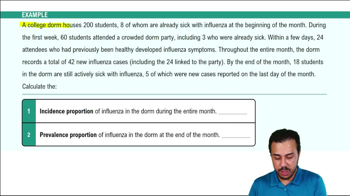
  • Incidence

    Number of new cases of a disease in a population during a specific time period.
  • Prevalence

    Total number of disease cases, both new and preexisting, in a population at a specific time.
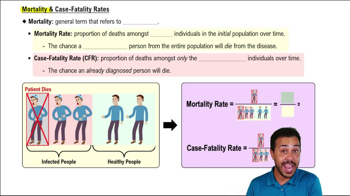
  • Mortality Rate

    Proportion of deaths among all individuals in a population over a given time period.
  • Case Fatality Rate

    Proportion of deaths among diagnosed individuals, indicating disease severity among those affected.