Back

Introduction to Antimicrobial Drugs definitions

Control buttons has been changed to "navigation" mode.
1/13
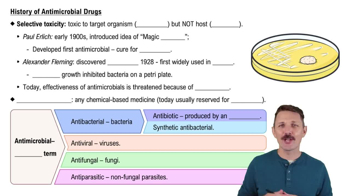
  • Selective Toxicity

    Ability of a chemical to harm microbes without damaging the host, forming the foundation for effective antimicrobial therapy.
  • Pathogen

    A microorganism responsible for causing disease within a host organism.
  • Magic Bullet

    A concept describing a chemical agent that specifically targets and destroys pathogens without harming the host.
  • Antimicrobial

    A general term for any drug or agent that inhibits or kills microbes, including bacteria, viruses, fungi, or parasites.
  • Antibacterial

    A substance or drug designed to inhibit or kill bacterial organisms specifically.
  • Antibiotic

    A naturally produced antibacterial agent, such as penicillin, derived from organisms like molds.
  • Antiviral

    A drug or agent that targets and inhibits the replication or function of viruses.
  • Antifungal

    A drug or agent that targets and inhibits the growth of fungi.
  • Antiparasitic

    A drug or agent used to treat infections caused by nonfungal parasites or eukaryotic organisms.
  • Chemotherapy

    The use of chemical substances to treat diseases, including microbial infections, not limited to cancer therapy.
  • Resistance

    The ability of microbes to withstand the effects of drugs that once killed or inhibited them, threatening treatment success.
  • Penicillin

    The first true antibiotic, discovered from mold, which inhibits bacterial growth and revolutionized infection treatment.
  • Synthetic Antibacterial

    A laboratory-made drug designed to inhibit or kill bacteria, distinct from naturally occurring antibiotics.