Back

Inhibitors of Nucleic Acid Synthesis definitions

Control buttons has been changed to "navigation" mode.
1/15
  • Quinolones

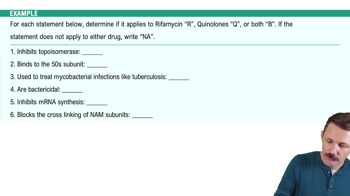
    A class of antibiotics that disrupt bacterial DNA replication by targeting enzymes responsible for unwinding DNA, leading to lethal double-strand breaks.
  • Fluoroquinolones

    Semi-synthetic antibiotics derived from quinolones with a fluorine atom, effective against a broad range of bacteria and known for rare tendon rupture side effects.
  • Topoisomerase

    An enzyme in bacteria that unwinds and re-ligates DNA strands during replication, serving as a target for certain antibiotics.
  • DNA Gyrase

    A specific type of topoisomerase in bacteria that introduces negative supercoils into DNA, essential for replication and a key antibiotic target.
  • Double-Strand Breaks

    Lethal interruptions in both strands of bacterial DNA caused by failed re-ligation during replication, often induced by specific antibiotics.
  • Ciprofloxacin

    A commonly prescribed fluoroquinolone, especially for urinary tract infections, recognized by its trade name Cipro.
  • Broad-Spectrum Antibiotics

    Drugs effective against both gram-positive and gram-negative bacteria, increasing their clinical utility.
  • Rifamycin

    A group of antibiotics that block bacterial RNA synthesis by binding to RNA polymerase, crucial for treating tuberculosis and leprosy.
  • RNA Polymerase

    An enzyme that synthesizes RNA from a DNA template in bacteria, targeted by certain antibiotics to halt RNA production.
  • Rifampin

    A rifamycin antibiotic used primarily against mycobacterial infections, including tuberculosis and leprosy.
  • Selective Toxicity

    A property of antibiotics that allows them to target bacterial enzymes without harming human counterparts, ensuring effective treatment.
  • Antibiotic Resistance

    The ability of bacteria to withstand the effects of drugs designed to kill or inhibit them, complicating treatment strategies.
  • Gram-Positive Bacteria

    Bacteria with thick peptidoglycan cell walls, often susceptible to a range of antibiotics including some nucleic acid synthesis inhibitors.
  • Gram-Negative Bacteria

    Bacteria with thin peptidoglycan layers and outer membranes, sometimes more resistant but still targeted by broad-spectrum drugs.
  • Transcription Enzymes

    Proteins in bacteria responsible for synthesizing RNA from DNA, differing from human versions and serving as antibiotic targets.