Back

Inhibitors of Cell Wall Synthesis: Polypeptide Antibiotics & Isoniazid quiz

Control buttons has been changed to "navigation" mode.
1/15
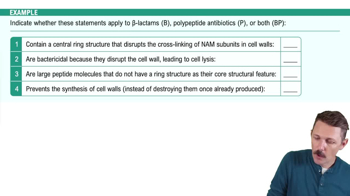
  • What distinguishes polypeptide antibiotics from beta-lactam antibiotics in their mechanism of action?

    Polypeptide antibiotics disrupt cell wall synthesis by targeting peptidoglycan formation, not the cross-linking step targeted by beta-lactam antibiotics.
  • Which step of cell wall synthesis do polypeptide antibiotics target?

    They target an earlier step in peptidoglycan synthesis, not the cross-linking of peptidoglycan.
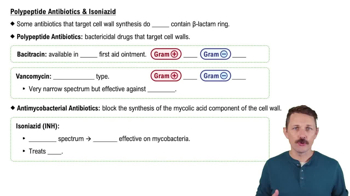
  • What is bacitracin commonly used for and how is it administered?

    Bacitracin is used as a topical antibiotic, often found in over-the-counter first aid ointments like Neosporin.
  • Against which type of bacteria is bacitracin most effective?

    Bacitracin is most effective against gram-positive bacteria.
  • Why is bacitracin considered a narrow-spectrum antibiotic?

    It mainly targets gram-positive bacteria and is not effective against gram-negative bacteria.
  • What is vancomycin and what type of antibiotic is it classified as?

    Vancomycin is a glycopeptide antibiotic, a subtype of polypeptide antibiotics.
  • For which resistant infection is vancomycin particularly important?

    Vancomycin is important for treating MRSA (methicillin-resistant Staphylococcus aureus) infections.
  • What is a growing concern regarding vancomycin use?

    Emerging resistance to vancomycin is becoming a concern.
  • What is the spectrum of activity for vancomycin?

    Vancomycin has a very narrow spectrum, mainly effective against certain gram-positive bacteria.
  • What component of the bacterial cell wall does isoniazid target?

    Isoniazid targets the synthesis of mycolic acid in the cell wall.
  • Which group of bacteria is affected by isoniazid?

    Isoniazid is effective only against mycobacteria, which have mycolic acid in their cell wall.
  • What diseases are treated with isoniazid?

    Isoniazid is used to treat tuberculosis and leprosy.
  • Why are polypeptide antibiotics and isoniazid considered narrow-spectrum?

    They target specific bacterial structures, such as peptidoglycan or mycolic acid, limiting their effectiveness to certain bacteria.
  • How are acid-fast bacteria identified in the laboratory?

    Acid-fast bacteria are identified using acid-fast staining techniques.
  • What is the significance of targeting cell wall synthesis in antibiotic therapy?

    Disrupting cell wall synthesis is crucial for combating resistant pathogens and specific bacterial groups like acid-fast bacteria.