Back

Inhibitors of Cell Wall Synthesis: Polypeptide Antibiotics & Isoniazid definitions

Control buttons has been changed to "navigation" mode.
1/15
  • Polypeptide Antibiotics

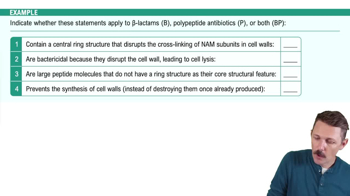
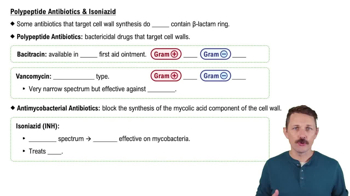
    Bactericidal agents composed of amino acids that disrupt bacterial cell wall synthesis at a step before cross-linking.
  • Bacitracin

    A topical, narrow-spectrum agent found in first aid ointments, effective mainly against gram-positive bacteria.
  • Vancomycin

    A glycopeptide used to treat resistant infections like MRSA, with activity limited to certain gram-positive bacteria.
  • Glycopeptide

    A class of antibiotics, including vancomycin, characterized by sugar and peptide components targeting cell wall synthesis.
  • Isoniazid

    A narrow-spectrum antimycobacterial drug that blocks mycolic acid synthesis, crucial for treating tuberculosis and leprosy.
  • Mycolic Acid

    A fatty acid component unique to mycobacterial cell walls, essential for their survival and targeted by isoniazid.
  • Peptidoglycan

    A structural polymer in bacterial cell walls, targeted at different synthesis steps by various antibiotics.
  • Beta-Lactam Ring

    A chemical structure absent in polypeptide antibiotics but central to other cell wall synthesis inhibitors.
  • Narrow-Spectrum Activity

    Selective effectiveness against a limited range of bacteria, often due to targeting specific cell wall components.
  • Gram-Positive Bacteria

    Microorganisms with thick peptidoglycan layers, making them susceptible to certain cell wall synthesis inhibitors.
  • MRSA

    A resistant strain of Staphylococcus aureus, treatable with vancomycin due to its unique cell wall targeting.
  • Antimycobacterial Antibiotics

    Agents specifically designed to inhibit mycobacteria by targeting unique cell wall components like mycolic acid.
  • Tuberculosis

    A disease caused by mycobacteria, requiring drugs like isoniazid that target mycolic acid synthesis.
  • Leprosy

    A chronic infection caused by mycobacteria, treatable with agents that inhibit mycolic acid formation.
  • Acid-Fast Staining

    A diagnostic technique used to identify bacteria with mycolic acid-rich cell walls, such as mycobacteria.