Back

Factors Influencing Epidemiology quiz

Control buttons has been changed to "navigation" mode.
1/15
  • What are host-microbe interactions and why are they central to disease epidemiology?

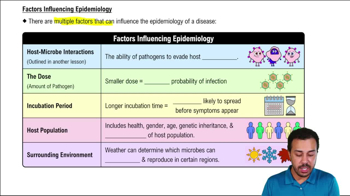
    Host-microbe interactions involve the characteristics of both the host's immune system and the microbe's ability to cause disease. They determine whether a disease occurs, its severity, and how it spreads in the population.
  • How does the dose of a pathogen affect the probability of infection?

    A smaller dose of a pathogen results in a lower probability of infection compared to a higher dose. The amount of pathogen exposure influences the likelihood of disease development.
  • What is the incubation period in infectious diseases?

    The incubation period is the time between the introduction of a pathogen into a host and the appearance of the first signs and symptoms. Diseases with longer incubation periods can spread more before symptoms appear.
  • Why can diseases with longer incubation periods be more dangerous epidemiologically?

    They can spread before people realize they are sick, increasing the risk of widespread transmission. This makes controlling outbreaks more challenging.
  • List at least three host population characteristics that influence disease epidemiology.

    Overall health, age, gender, genetic inheritance, and immunity of the population are key characteristics. These factors affect how easily a disease can spread.
  • How does herd immunity protect nonimmune individuals?

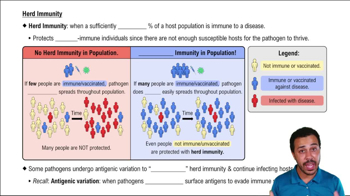
    Herd immunity occurs when a high percentage of the population is immune, limiting pathogen spread. This protects even those who are not immune by reducing the number of susceptible hosts.
  • Why are vaccines considered safer than natural exposure for building immunity?

    Vaccines provide immunity without the risks associated with disease exposure. Natural infection can be dangerous, while vaccines are generally much safer.
  • What environmental factors can influence the epidemiology of a disease?

    Weather, temperature, humidity, and seasonal changes can affect which microbes thrive and how diseases spread. For example, flu spreads more easily in winter.
  • What is antigenic variation and how does it affect herd immunity?

    Antigenic variation is when pathogens change their surface antigens to evade the immune system. It can allow pathogens to infect previously immune or vaccinated hosts, reducing herd immunity effectiveness.
  • Why do flu vaccines need to be updated regularly?

    The flu virus frequently undergoes antigenic variation, changing its surface antigens. This means old vaccines may not protect against new strains, requiring annual updates.
  • How does the presence of many immune individuals in a population affect disease spread?

    It makes it harder for the pathogen to find susceptible hosts, reducing the spread of disease. This is the basis of herd immunity.
  • What happens in a population with no herd immunity when an infected individual is present?

    The disease can spread rapidly because most people are susceptible. Few immune individuals mean little protection for the population.
  • How does being immunocompromised relate to herd immunity?

    Immunocompromised individuals may not be able to get vaccinated and rely on herd immunity for protection. High population immunity helps protect these vulnerable people.
  • What role does the ability of pathogens to evade host immune defenses play in epidemiology?

    Pathogens that can evade immune defenses are more likely to cause infection and spread. This ability influences disease patterns and control strategies.
  • How can seasons influence the epidemiology of diseases like the flu?

    Seasons affect human behavior and environmental conditions, such as people being indoors more in winter. This increases close contact and facilitates the spread of diseases like the flu.