Back

Factors Influencing Epidemiology definitions

Control buttons has been changed to "navigation" mode.
1/13
  • Epidemiology

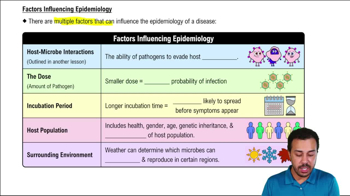
    Study of disease distribution, spread, and patterns within populations, focusing on factors that influence outbreaks and transmission.
  • Host-microbe interactions

    Dynamic relationships between a host's immune system and a microbe's disease-causing abilities, shaping infection outcomes.
  • Pathogenicity

    Capacity of a microbe to cause disease, influenced by its traits and ability to overcome host defenses.
  • Immune evasion

    Microbial strategies to avoid detection or destruction by host immune defenses, enabling persistent infection.
  • Dose

    Initial quantity of pathogen encountered by a host, directly impacting the likelihood of infection.
  • Incubation period

    Time between pathogen entry and appearance of first symptoms, affecting how widely a disease can spread unnoticed.
  • Host population characteristics

    Attributes such as immunity, age, health, and genetics within a group that influence disease susceptibility and spread.
  • Herd immunity

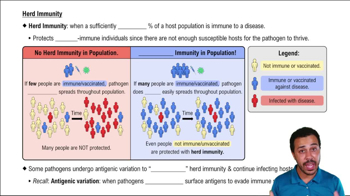
    Protection of nonimmune individuals when a high proportion of a population is immune, limiting pathogen transmission.
  • Vaccination

    Preventive measure that induces immunity safely, reducing disease spread and supporting herd immunity.
  • Immunocompromised individuals

    People with weakened immune systems who rely on population-level immunity for protection against infections.
  • Antigenic variation

    Alteration of microbial surface molecules, allowing evasion of immune responses and undermining previous immunity.
  • Environmental factors

    External conditions like weather, temperature, and humidity that affect microbe survival and disease transmission.
  • Susceptible host

    Individual lacking immunity, making them vulnerable to infection upon exposure to a pathogen.