Back

Exotoxins vs. Endotoxin Review definitions

Control buttons has been changed to "navigation" mode.
1/14
  • Exotoxin

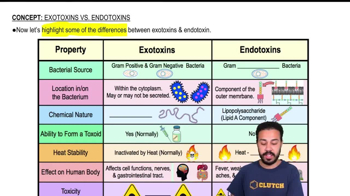
    Protein-based molecule from bacteria, highly toxic, heat-sensitive, and can affect various tissues even at low concentrations.
  • Endotoxin

    Lipopolysaccharide component of gram-negative bacteria's outer membrane, mainly toxic when entering the bloodstream.
  • Gram-positive bacteria

    Microorganisms with thick peptidoglycan cell walls, capable of producing protein-based toxins.
  • Gram-negative bacteria

    Microorganisms with an outer membrane containing lipopolysaccharides, exclusive source of endotoxins.
  • Cytoplasm

    Intracellular region where protein-based toxins are synthesized and stored before release.
  • Outer membrane

    Structural layer in gram-negative bacteria housing lipopolysaccharides, including the toxic lipid A region.
  • Lipopolysaccharide

    Molecule in gram-negative bacteria's outer membrane, with a lipid A region responsible for toxic effects.
  • Lipid A

    Toxic portion of the lipopolysaccharide molecule, triggering immune responses and septic shock.
  • Toxoid

    Inactivated toxin derived from exotoxins, used in vaccines to elicit protective immunity.
  • Heat sensitivity

    Characteristic of protein-based toxins, allowing inactivation by high temperatures or autoclaving.
  • Heat resistance

    Property of lipopolysaccharide-based toxins, making them difficult to inactivate with standard heat methods.
  • Toxicity

    Degree of harmfulness; high for protein-based toxins at low doses, low for lipopolysaccharide toxins unless in bloodstream.
  • Septic shock

    Severe, potentially fatal condition caused by endotoxin entry into the bloodstream, leading to systemic inflammation.
  • Lethal dose

    Smallest quantity of a toxin required to cause harmful effects; lower for protein-based toxins than for lipopolysaccharide toxins.