Back

Exotoxins Cause Damage to the Host definitions

Control buttons has been changed to "navigation" mode.
1/15
  • Exotoxin

    A highly specific protein produced by microbes that causes targeted damage to host tissues, often at very low concentrations.
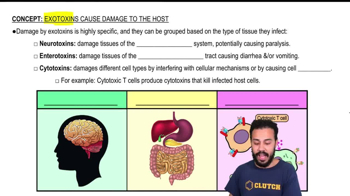
  • Neurotoxin

    A molecule that disrupts nervous system function, potentially resulting in paralysis by targeting neural tissues.
  • Enterotoxin

    A substance that affects the intestinal tract, often leading to symptoms like diarrhea or vomiting.
  • Cytotoxin

    A factor that interferes with cellular mechanisms or induces cell lysis, harming various cell types.
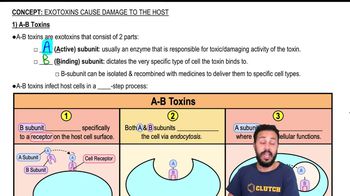
  • AB Toxin

    A two-part molecule with an active enzymatic component and a binding component that targets specific cells.
  • A Subunit

    The enzymatic portion of a two-part toxin responsible for disrupting cellular processes such as translation.
  • B Subunit

    The binding portion of a two-part toxin that determines which cell type is targeted, but is not itself toxic.
  • Endocytosis

    A cellular process where external substances are engulfed into vesicles, allowing entry of certain toxins.
  • Membrane Damaging Toxin

    A group of molecules that disrupt cytoplasmic membranes, leading to cell lysis and death.
  • Pore-Forming Toxin

    A protein that creates holes in cell membranes, causing loss of integrity and cell lysis.
  • Phospholipase

    An enzyme that hydrolyzes phospholipids in membranes, disrupting structure and causing cell lysis.
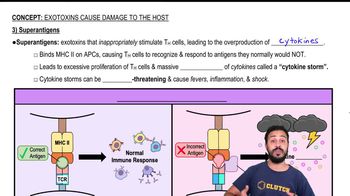
  • Superantigen

    A molecule that triggers excessive activation of helper T cells, resulting in massive cytokine release.
  • MHC Class II Molecule

    A protein on antigen-presenting cells that displays antigens to helper T cells, targeted by certain toxins.
  • Cytokine Storm

    A life-threatening immune reaction marked by an overwhelming release of signaling molecules.
  • Antigen Presenting Cell

    A cell type that displays foreign or self molecules to T cells, initiating immune responses.