Back

Drug Interactions: Synergism and Antagonism definitions

Control buttons has been changed to "navigation" mode.
1/12
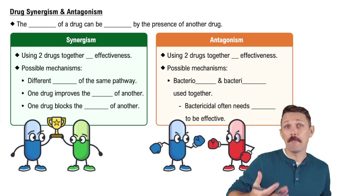
  • Synergism

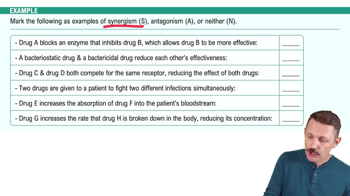
    A phenomenon where two antibiotics combined produce a greater effect than the sum of their individual actions.
  • Antagonism

    A situation where the combined use of two drugs results in reduced effectiveness compared to their separate use.
  • Biochemical Pathway

    A series of connected chemical reactions within a cell, often targeted at multiple steps by antibiotics for enhanced effect.
  • Efficacy

    The degree to which a drug achieves its intended effect, which can be altered by the presence of another drug.
  • Bacteriostatic Drug

    A compound that halts bacterial growth, potentially interfering with drugs that require active cell division to work.
  • Bactericidal Drug

    A compound that kills bacteria, often relying on active bacterial growth for optimal action.
  • Uptake

    The process by which a drug enters a bacterial cell, sometimes enhanced by another drug disrupting the cell wall or membrane.
  • Cell Wall Disruption

    A mechanism where a drug compromises bacterial structural integrity, facilitating entry of other antibiotics.
  • Inhibitor

    A molecule that blocks the action of a drug, sometimes neutralized by another drug to restore effectiveness.
  • Metabolic Pathway Inhibition

    A strategy where antibiotics block essential cellular processes, often at multiple steps for increased potency.
  • Antibiotic Resistance

    A challenge in therapy where bacteria withstand drug effects, often addressed by combining drugs with synergistic actions.
  • Antibiotic Therapy

    The clinical use of antimicrobial agents, optimized by understanding drug interactions for effective infection control.