Back

Chemicals Used to Control Microbial Growth definitions

Control buttons has been changed to "navigation" mode.
1/15
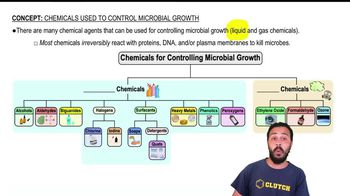
  • Alcohols

    Liquid agents that disrupt proteins and membranes, often used for disinfection due to their rapid action and effectiveness when diluted.
  • Aldehydes

    Liquid chemicals that inactivate proteins and DNA, providing high-level disinfection and sterilization, especially for sensitive equipment.
  • Biguanides

    Liquid agents effective against a broad range of microbes, commonly used in antiseptics for skin and mucous membranes.
  • Halogens

    Elements like chlorine and iodine used as disinfectants, acting by oxidizing cellular components and disrupting microbial function.
  • Surfactants

    Compounds such as soaps and detergents that lower surface tension, aiding in the removal of microbes from surfaces.
  • Heavy Metals

    Ions like silver and mercury that bind to proteins, causing inactivation and microbial death at low concentrations.
  • Phenolics

    Aromatic compounds that disrupt cell membranes and denature proteins, providing persistent antimicrobial activity.
  • Peroxygens

    Strong oxidizing agents, such as hydrogen peroxide, that damage cellular components and are effective for sterilization.
  • Ethylene Oxide

    A gaseous sterilant that penetrates materials and inactivates proteins and DNA, suitable for heat-sensitive items.
  • Formaldehyde

    A gaseous or liquid agent that crosslinks proteins and nucleic acids, ensuring broad-spectrum microbial control.
  • Ozone

    A reactive gas used as a disinfectant, oxidizing cellular components and effective in water and air treatment.
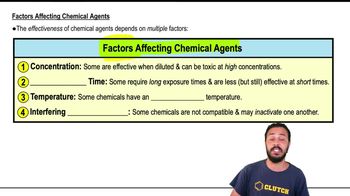
  • Concentration

    The amount of chemical agent present, influencing effectiveness and toxicity; dilution can enhance safety and efficacy.
  • Exposure Time

    The duration microbes are in contact with a chemical agent, directly impacting the agent's effectiveness.
  • Temperature

    A factor that can enhance or reduce chemical agent efficacy, with many agents having optimal working ranges.
  • Interfering Chemicals

    Substances that react with chemical agents, potentially inactivating them and reducing their antimicrobial effectiveness.