Back

Chemical Gases: Ethylene Oxide, Ozone, & Formaldehyde quiz

Control buttons has been changed to "navigation" mode.
1/15
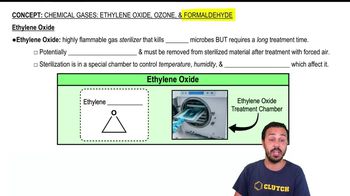
  • What is ethylene oxide primarily used for in microbial control?

    Ethylene oxide is used as a gas sterilizer capable of killing all microbes, including endospores.
  • Why must ethylene oxide be removed from sterilized materials after treatment?

    Ethylene oxide is highly flammable, explosive, and potentially carcinogenic, so it must be removed for safety.
  • What type of chamber is required for ethylene oxide sterilization?

    A specialized chamber is needed to control variables like temperature, humidity, and gas concentration.
  • What is a major disadvantage of using ethylene oxide for sterilization?

    It requires long treatment times and poses risks due to its flammability and carcinogenicity.
  • How is ethylene oxide removed from treated materials?

    It is forced out with air after the sterilization process.
  • What types of items are best sterilized with ethylene oxide?

    Ethylene oxide is ideal for heat-sensitive and moisture-sensitive items like electrical equipment, mattresses, and pillows.
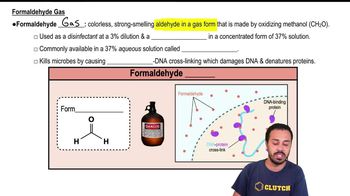
  • What is formalin and how is it related to formaldehyde?

    Formalin is a 37% aqueous solution of formaldehyde, used for microbial control.
  • How does formaldehyde kill microbes?

    It causes protein-DNA cross-linking, damaging DNA and denaturing proteins, which destroys microbes.
  • What is the chemical formula for formaldehyde?

    The chemical formula for formaldehyde is CH2O.
  • At what concentration is formaldehyde used as a disinfectant?

    Formaldehyde is used as a disinfectant at a 3% dilution.
  • What is the main mechanism by which formaldehyde destroys microbial cells?

    It covalently links proteins to DNA, leading to DNA damage and protein denaturation.
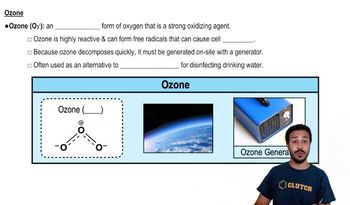
  • What is the chemical formula for ozone?

    Ozone's chemical formula is O3.
  • Why must ozone be generated on-site for microbial control?

    Ozone is highly unstable and decomposes quickly, so it must be produced where it is used.
  • How does ozone kill microbial cells?

    Ozone acts as a strong oxidizing agent, forming free radicals that cause cell lysis.
  • What is a common application of ozone in microbial control?

    Ozone is used as an alternative to chlorine for disinfecting water and protecting against UV light in the atmosphere.