Skip to main content
Microbiology
My Course
Learn
Exam Prep
AI Tutor
Study Guides
Textbook Solutions
Flashcards
Explore
Try the app
My Course
Learn
Exam Prep
AI Tutor
Study Guides
Textbook Solutions
Flashcards
Explore
Try the app
Back
Atoms- Smallest Unit of Matter definitions
You can tap to flip the card.
Atom
You can tap to flip the card.
👆
Atom
Smallest unit of matter, forming both living and nonliving things, and composed of subatomic particles.
Track progress
Control buttons has been changed to "navigation" mode.
1/17
Related flashcards
Related practice
Recommended videos
Atoms- Smallest Unit of Matter quiz
Atoms- Smallest Unit of Matter
15 Terms
Atoms- Smallest Unit of Matter 
3. Chemical Principles of Microbiology
7 problems
Topic
Brendan
Isotopes
3. Chemical Principles of Microbiology
4 problems
Topic
Brendan
3. Chemical Principles of Microbiology
7 topics
12 problems
Chapter
Nicole
02:13
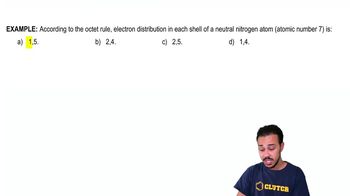
Atoms- Smallest Unit of Matter Example 1
204
views
03:51
Atoms- Smallest Unit of Matter Example 3
19
views
09:44
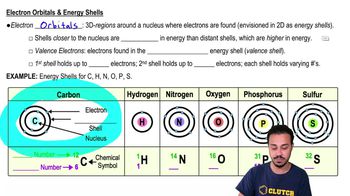
Electron Orbitals & Energy Shells
20
views
Terms in this set (17)
Hide definitions
Atom
Smallest unit of matter, forming both living and nonliving things, and composed of subatomic particles.
Matter
Anything that occupies space and has mass, including all living and nonliving substances.
Chemical Element
Pure substance made of only one type of atom, defining the basic building blocks of matter.
Proton
Positively charged subatomic particle located in the nucleus, determining the identity of an element.
Neutron
Electrically neutral subatomic particle found in the nucleus, contributing to atomic mass.
Electron
Negatively charged subatomic particle orbiting the nucleus in energy shells, involved in chemical bonding.
Nucleus
Central region of an atom containing protons and neutrons, accounting for most of its mass.
Atomic Number
Total number of protons in the nucleus, uniquely identifying each chemical element.
Mass Number
Sum of protons and neutrons in the nucleus, representing the mass of a single atom.
Atomic Mass
Average mass of all atoms of an element, reflecting natural isotope abundance.
Electron Orbital
Three-dimensional region around the nucleus where electrons are likely to be found.
Energy Shell
Layer surrounding the nucleus where electrons reside, with each shell holding a set number of electrons.
Valence Shell
Outermost energy shell of an atom, containing electrons that determine chemical reactivity.
Valence Electron
Electron located in the outermost energy shell, crucial for forming chemical bonds.
Octet Rule
Principle stating atoms are most stable when their valence shell holds eight electrons.
Bulk Element
Element required in large amounts for life, such as those remembered by the acronym CHNOPS.
Trace Element
Element essential for life but needed only in very small quantities.
 BackBack
 02:13
02:13