Back

Antifungal Drugs definitions

Control buttons has been changed to "navigation" mode.
1/15
  • Selective Toxicity

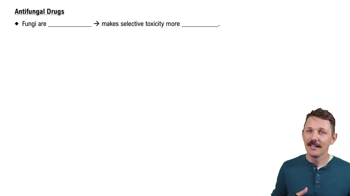
    Exploiting cellular differences between fungi and humans to minimize harm to host while targeting fungal pathogens.
  • Ergosterol

    A sterol unique to fungal cell membranes, serving as a key target for many antifungal drugs.
  • Cholesterol

    A sterol found in human and animal cell membranes, structurally distinct from its fungal counterpart.
  • Azoles

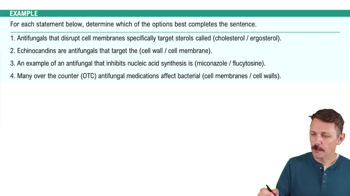
    A drug class that blocks ergosterol synthesis, commonly used for skin and mucosal fungal infections.
  • Allylamines

    A group of antifungals that inhibit ergosterol production, often used for treating athlete's foot.
  • Polyenes

    Agents that bind to ergosterol in fungal membranes, causing destabilization and cell death.
  • Echinocandins

    Drugs that inhibit beta glucan synthesis, leading to weakened fungal cell walls and cell lysis.
  • Beta Glucan

    A polysaccharide component of fungal cell walls, absent in humans, targeted by specific antifungals.
  • Flucytosine

    A cytosine analog converted by fungi into a toxic compound that disrupts nucleic acid synthesis.
  • Microtubule Assembly

    A process essential for fungal cell division, disrupted by certain antifungal agents.
  • Griseofulvin

    An oral antifungal that concentrates in keratin-rich tissues, inhibiting fungal cell division.
  • Keratin

    A structural protein in skin, hair, and nails where some antifungals accumulate to treat infections.
  • Systemic Mycoses

    Fungal infections affecting internal organs, often requiring potent antifungal therapy.
  • Cutaneous Mycoses

    Fungal infections limited to skin, hair, or nails, typically treated with topical or oral agents.
  • Cytosine Analog

    A molecule resembling a DNA/RNA base, used by fungi in place of cytosine, leading to faulty nucleic acids.