Back

Animal Viruses: DNA Virus Synthesis & Replication definitions

Control buttons has been changed to "navigation" mode.
1/15
  • Cytoplasm

    Intracellular location where most DNA viruses replicate and utilize host cellular machinery for synthesis.
  • Viral DNA Polymerase

    Enzyme encoded by many DNA viruses enabling genome replication independent of host cell division.
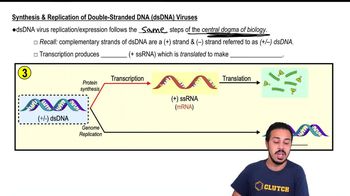
  • Double Stranded DNA

    Genomic form with complementary plus (coding) and minus (template) strands, following the central dogma.
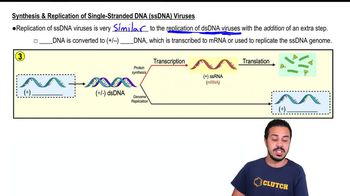
  • Single Stranded DNA

    Genomic form requiring conversion to a double stranded intermediate before replication and protein synthesis.
  • Central Dogma

    Biological principle describing the flow of genetic information from DNA to RNA to protein.
  • Transcription

    Process using DNA as a template to synthesize messenger RNA, initiating viral protein production.
  • Translation

    Cellular mechanism decoding messenger RNA to assemble viral proteins necessary for replication.
  • Messenger RNA

    Plus-sense RNA molecule transcribed from DNA, carrying genetic instructions for protein synthesis.
  • Genome Replication

    Reproduction of the original viral genome, ensuring new viral particles inherit genetic material.
  • Coding Strand

    DNA strand with the same sequence as messenger RNA, representing genetic instructions for proteins.
  • Template Strand

    DNA strand serving as the pattern for synthesizing complementary RNA during transcription.
  • Viral Proteins

    Molecules produced from viral genetic material, including enzymes and structural components for new virions.
  • Assembly

    Stage where replicated genomes and synthesized proteins combine to form new infectious viral particles.
  • Plus Strand

    Nucleic acid strand encoding genetic information, often used as a template for protein synthesis.
  • Minus Strand

    Nucleic acid strand complementary to the coding sequence, serving as a template during replication.