Back

Animal Viruses: 1. Attachment to the Host Cell quiz

Control buttons has been changed to "navigation" mode.
1/15
  • What is the first step in an animal virus infection?

    The first step is attachment to the host cell.
  • What do animal viruses use to attach to host cells?

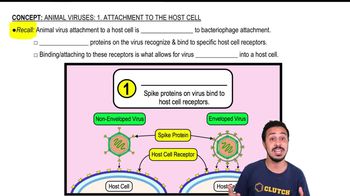
    Animal viruses use spike proteins to attach to host cell receptors.
  • How is animal virus attachment similar to bacteriophage attachment?

    Both rely on protein interactions between viral proteins and host cell receptors.
  • What is the role of spike proteins in animal virus attachment?

    Spike proteins recognize and bind to specific host cell receptors, facilitating attachment.
  • Why is attachment important for animal viruses?

    Attachment is necessary for the virus to enter the host cell, which is the next step in infection.
  • Where are spike proteins located on non-enveloped viruses?

    On non-enveloped viruses, spike proteins are found on the viral coat.
  • Where are spike proteins located on enveloped viruses?

    On enveloped viruses, spike proteins protrude from the lipid envelope.
  • What do spike proteins interact with on the host cell?

    Spike proteins interact with specific receptor proteins on the host cell surface.
  • What is the second step after attachment in animal virus infection?

    The second step is entry of the virus into the host cell.
  • What is the function of the lipid envelope in enveloped viruses?

    The lipid envelope surrounds the protein coat and allows spike proteins to protrude outward.
  • What must occur before an animal virus can enter a host cell?

    The virus must first attach to the host cell via spike protein and receptor interaction.
  • How do non-enveloped and enveloped viruses differ in spike protein placement?

    Non-enveloped viruses have spike proteins on their coat, while enveloped viruses have them protruding from the lipid envelope.
  • What determines the specificity of animal virus attachment?

    The specificity is determined by the interaction between viral spike proteins and specific host cell receptors.
  • What is the main similarity between bacteriophage and animal virus attachment?

    Both involve protein interactions for attachment to host cells.
  • What is the outcome of the interaction between viral spike proteins and host cell receptors?

    This interaction results in the attachment of the virus to the host cell, enabling infection to proceed.