
Ch. 10 - Classification of Microorganisms
Tortora - Microbiology: An Introduction 14th Edition
Tortora14th EditionMicrobiology: An IntroductionISBN: 9780138200398Not the one you use?Change textbook
Chapter 10, Problem 1

Bergey’s Manual of Systematics of Archaea and Bacteria differs from Bergey’s Manual of Determinative Bacteriology in that the former
a. Groups bacteria into species
b. Groups bacteria according to phylogenetic relationships
c. Groups bacteria according to pathogenic properties
d. Groups bacteria into 19 species
e. All of the above

Verified step by step guidance
1
Step 1: Understand the purpose of Bergey's Manual of Determinative Bacteriology, which primarily focuses on identifying bacteria based on phenotypic characteristics such as morphology, staining, and biochemical tests.
Step 2: Recognize that Bergey's Manual of Systematics of Archaea and Bacteria is designed to classify bacteria and archaea based on their evolutionary relationships, using genetic and molecular data.
Step 3: Compare the two manuals: the Determinative Manual groups bacteria for identification purposes, often based on observable traits, while the Systematics Manual groups bacteria according to phylogenetic (evolutionary) relationships.
Step 4: Evaluate the answer choices in light of this understanding: the Systematics Manual groups bacteria according to phylogenetic relationships, which corresponds to option (b).
Step 5: Conclude that the key difference is the basis of grouping—phenotypic identification versus phylogenetic classification—highlighting the importance of molecular data in modern bacterial taxonomy.

Verified video answer for a similar problem:

This video solution was recommended by our tutors as helpful for the problem above.
Video duration:
2m
Was this helpful?

Key Concepts

Here are the essential concepts you must grasp in order to answer the question correctly.

Bergey’s Manual of Determinative Bacteriology

This manual focuses on identifying bacteria based on observable characteristics such as morphology, staining, and biochemical tests. It is primarily used for practical identification rather than understanding evolutionary relationships.
Recommended video:
Guided course
06:28
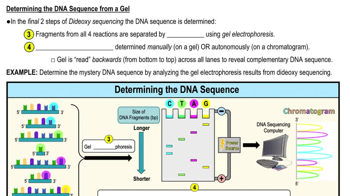
Determining the DNA Sequence from a Gel

Bergey’s Manual of Systematics of Archaea and Bacteria

This manual classifies bacteria and archaea based on phylogenetic relationships derived from genetic and molecular data, reflecting evolutionary history rather than just physical traits or pathogenicity.
Recommended video:
Guided course
04:39
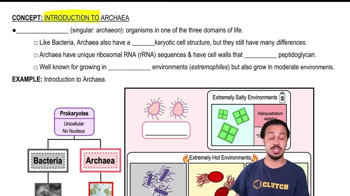
Introduction to Archaea

Phylogenetic Classification

Phylogenetic classification groups organisms based on their evolutionary ancestry and genetic relatedness, often using DNA sequencing data. This approach provides a more accurate understanding of microbial diversity and relationships.
Recommended video:
Guided course
04:56
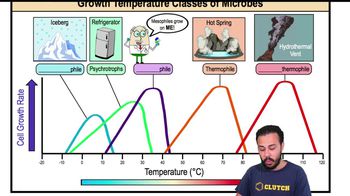
Classification of Microbes by Growth Temperature