Ch. 11 - The Prokaryotes: Domains Bacteria and Archaea
Tortora - Microbiology: An Introduction 14th Edition
Tortora14th EditionMicrobiology: An IntroductionISBN: 9780138200398Not the one you use?Change textbook
Chapter 11, Problem 4

These organisms are important in sewage treatment and can produce a fuel used for home heating and for generating electricity.

Verified step by step guidance
1
Identify the type of organisms involved in sewage treatment that can produce fuel. These are typically microorganisms capable of breaking down organic matter anaerobically.
Understand that in sewage treatment, anaerobic bacteria decompose organic waste to produce biogas, which mainly consists of methane (CH\_4) and carbon dioxide (CO\_2).
Recognize that the fuel produced by these organisms is biogas, which can be captured and used for home heating and electricity generation.
Recall that the key group of microorganisms responsible for this process are methanogenic archaea, which thrive in anaerobic digesters during sewage treatment.
Summarize that these methanogens convert organic waste into methane-rich biogas, making them crucial for both waste management and renewable energy production.

Verified video answer for a similar problem:

This video solution was recommended by our tutors as helpful for the problem above.
Was this helpful?

Key Concepts

Here are the essential concepts you must grasp in order to answer the question correctly.

Role of Microorganisms in Sewage Treatment

Microorganisms, such as bacteria and archaea, play a crucial role in breaking down organic matter in sewage. They metabolize waste compounds, reducing pollutants and converting harmful substances into less toxic forms, which is essential for effective wastewater management.
Recommended video:
Guided course
01:25
Importance of Microorganisms

Anaerobic Digestion and Biogas Production

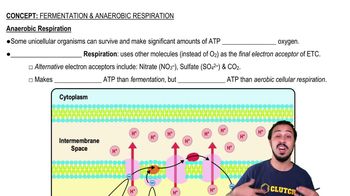
Anaerobic digestion is a process where microorganisms decompose organic material in the absence of oxygen, producing biogas primarily composed of methane and carbon dioxide. This biogas can be captured and used as a renewable fuel source for heating and electricity generation.
Recommended video:
Guided course
03:35
Anaerobic Respiration

Methanogenic Archaea

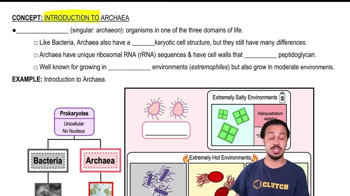
Methanogens are a group of archaea that produce methane as a metabolic byproduct during anaerobic digestion. They are key organisms in sewage treatment systems that generate biogas, making them vital for sustainable energy production from waste.
Recommended video:
Guided course
04:39
Introduction to Archaea