

Ch. 11 - The Prokaryotes: Domains Bacteria and Archaea
Tortora - Microbiology: An Introduction 14th Edition
Tortora14th EditionMicrobiology: An IntroductionISBN: 9780138200398Not the one you use?Change textbook
Chapter 11, Problem 3

Pathogenic bacteria can be
a. motile.
b. rods.
c. cocci.
d. anaerobic.
e. all of the above.

Verified step by step guidance
1
Understand the question is asking about characteristics that pathogenic bacteria can have.
Recall that 'motile' means capable of movement, which some pathogenic bacteria are, using structures like flagella.
Recognize that 'rods' (bacilli) and 'cocci' (spherical bacteria) are common bacterial shapes, and pathogenic bacteria can have either shape.
Know that 'anaerobic' bacteria can survive or grow without oxygen, and some pathogenic bacteria are anaerobic.
Conclude that since pathogenic bacteria can be motile, rods, cocci, and anaerobic, the correct answer includes all these options.

Verified video answer for a similar problem:

This video solution was recommended by our tutors as helpful for the problem above.
Video duration:
1m
Was this helpful?

Key Concepts

Here are the essential concepts you must grasp in order to answer the question correctly.

Bacterial Morphology

Bacteria exhibit various shapes, primarily rods (bacilli) and spheres (cocci). These shapes help in identification and classification of bacteria, including pathogenic types that cause diseases.
Recommended video:
Guided course
02:44
Types of Bacterial Cell Morphology

Bacterial Motility

Some bacteria are motile, meaning they can move using structures like flagella. Motility aids in colonization and infection processes, allowing pathogens to reach favorable environments within the host.
Recommended video:
Guided course
03:06
Bacterial Transformation

Oxygen Requirements of Bacteria

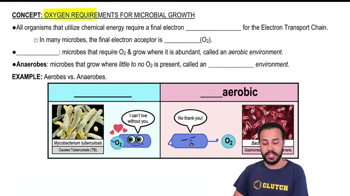
Bacteria can be aerobic (requiring oxygen) or anaerobic (thriving without oxygen). Pathogenic bacteria include anaerobes that survive in oxygen-poor tissues, influencing infection sites and treatment strategies.
Recommended video:
Guided course
03:52
Oxygen Requirements for Microbial Growth