
Ch. 7 - The Control of Microbial Growth
Tortora - Microbiology: An Introduction 14th Edition
Tortora14th EditionMicrobiology: An IntroductionISBN: 9780138200398Not the one you use?Change textbook
Chapter 7, Problem 10

What bacteria have porins, are resistant to bisphenols, and survive and may grow in quats?

Verified step by step guidance
1
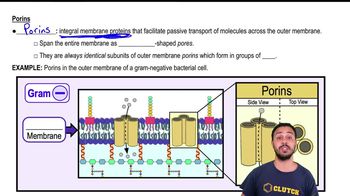
Step 1: Understand the role of porins in bacteria. Porins are protein channels located in the outer membrane of Gram-negative bacteria, allowing the passage of small molecules. This structural feature is key to identifying the type of bacteria in question.
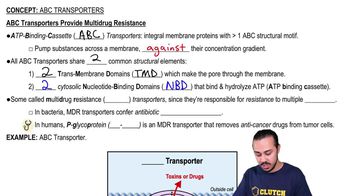
Step 2: Recognize that bisphenols, such as triclosan, target bacterial membranes and enzymes, but some bacteria show resistance due to their outer membrane properties and efflux mechanisms.
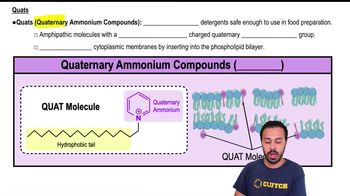
Step 3: Note that quaternary ammonium compounds (quats) are disinfectants that disrupt membranes, but certain bacteria can survive or even grow in their presence due to intrinsic resistance mechanisms.
Step 4: Combine these characteristics: bacteria with porins (indicating Gram-negative), resistance to bisphenols, and ability to survive or grow in quats are typically Gram-negative bacteria with robust outer membranes and efflux pumps.
Step 5: Conclude that the bacteria fitting this description are Gram-negative bacteria, such as Pseudomonas species, which are known for their porins, resistance to bisphenols, and survival in quats.

Verified video answer for a similar problem:

This video solution was recommended by our tutors as helpful for the problem above.
Video duration:
1m
Was this helpful?

Key Concepts

Here are the essential concepts you must grasp in order to answer the question correctly.

Porins in Bacteria

Porins are protein channels located in the outer membrane of Gram-negative bacteria that allow the passive diffusion of small molecules. They play a crucial role in controlling the entry of substances, including antibiotics and disinfectants, influencing bacterial resistance.
Recommended video:

Resistance to Bisphenols

Bisphenols, such as triclosan, are antimicrobial agents targeting bacterial membranes and enzymes. Some bacteria develop resistance through mechanisms like efflux pumps or membrane modifications, enabling them to survive despite bisphenol exposure.
Recommended video:
Guided course
06:20
ABC Transporters Provide Multidrug Resistance

Survival and Growth in Quaternary Ammonium Compounds (Quats)

Quats are disinfectants that disrupt microbial membranes. Certain bacteria, especially some Gram-negative species, can resist or tolerate quats by altering membrane permeability or producing protective biofilms, allowing them to survive and sometimes grow in their presence.
Recommended video: