
Textbook Question
Two ATP molecules are used to initiate glycolysis. Enzymes generate molecules of ATP for each molecule of glucose that undergoes glycolysis. Thus, a net gain of _________ molecules of ATP is produced in glycolysis.

 Verified step by step guidance
 02:55
02:55
 06:40
06:40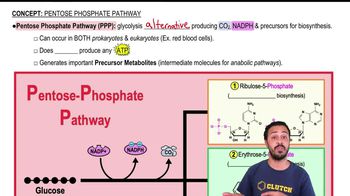 04:44
04:44Two ATP molecules are used to initiate glycolysis. Enzymes generate molecules of ATP for each molecule of glucose that undergoes glycolysis. Thus, a net gain of _________ molecules of ATP is produced in glycolysis.
For the phrase given below, indicate the type of metabolism referred to, using the following choices:
a. Anabolism only
b. Both anabolism and catabolism (amphibolic)
c. Catabolism only
Is exergonic
Indian tradition holds that storing water in brass pitchers prevents disease. Scientists have discovered that there is some truth in the tradition. The researchers collected river water samples and found fecal bacterial counts as high as 1 million bacteria per milliliter. However, they could detect no bacteria in the water after it had been stored for two days in traditional brass pitchers. Bacterial levels in plastic or earthenware containers remained high over the same period. How can brass, which is an alloy of copper mixed with zinc, make water safer to drink?
<IMAGE>
Examine the biosynthetic pathway for the production of the amino acids tryptophan, tyrosine, and phenylalanine in the figure. Where do the initial reactants (erythrose 4-phosphate and PEP) originate?
The initial catabolism of glucose occurs by glycolysis and/or the ________ and ________pathways.
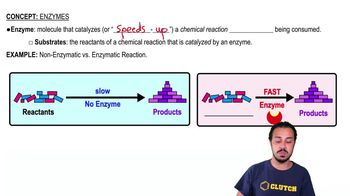
Why are enzymes necessary for anabolic reactions to occur in living organisms?