What is the reservation wage in the context of labor supply?
The reservation wage is the lowest wage someone is willing to accept to work; any wage below this, the individual would choose not to work.
How does the supply of labor typically respond to an increase in wages?
As wages increase, the supply of labor usually increases because individuals are more willing to work at higher wages.
What is meant by 'leisure' in economics when discussing labor supply?
Leisure refers to all time not spent working, including activities like relaxing, exercising, or spending time with family.
Why does the labor supply curve generally slope upward?
It slopes upward because higher wages make work more attractive, leading individuals to supply more labor.
What happens to the quantity of labor supplied at very low wages?
At very low wages, the quantity of labor supplied is low because fewer people are willing to work for such pay.
What is the substitution effect in the context of labor supply?
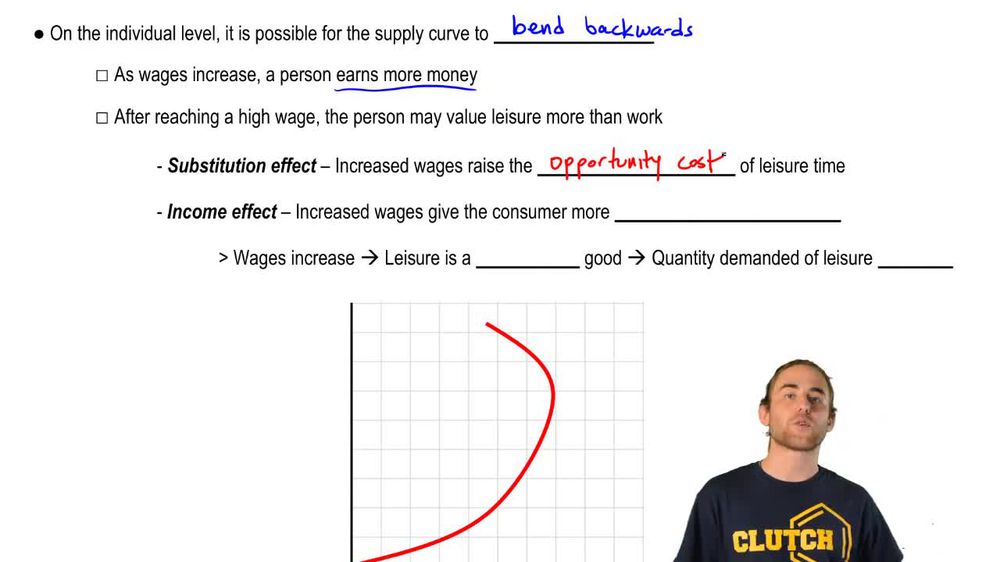
The substitution effect occurs when higher wages increase the opportunity cost of leisure, encouraging individuals to work more.
What is the income effect in the context of labor supply?
The income effect happens when higher wages give individuals more purchasing power, leading them to desire more leisure and work less.
Why might the individual labor supply curve bend backward at high wage levels?
At high wage levels, the income effect can outweigh the substitution effect, causing individuals to value leisure more and supply less labor.
How does the opportunity cost of leisure change as wages increase?
As wages increase, the opportunity cost of leisure rises because each hour not worked means giving up more income.
What does it mean when leisure is described as a 'normal good'?
Leisure is a normal good because as income increases, individuals demand more leisure time.
At what point does the labor supply curve start to bend backward?
The curve bends backward when the income effect becomes stronger than the substitution effect, leading individuals to choose more leisure over additional work.
How does the market supply of labor compare to individual supply curves?
The market supply of labor aggregates individual supply decisions and typically appears as an upward-sloping curve, similar to product supply.
What trade-off do individuals face when deciding how much labor to supply?
Individuals trade off between earning income by working and enjoying leisure time.
Why might someone refuse to work at a wage below their reservation wage?
Because the wage does not compensate enough for the loss of leisure, so they prefer not to work.
What role do substitution and income effects play in shaping the labor supply curve?
The substitution effect encourages more work as wages rise, while the income effect can eventually lead to less work and more leisure at high wage levels.
 Back
Back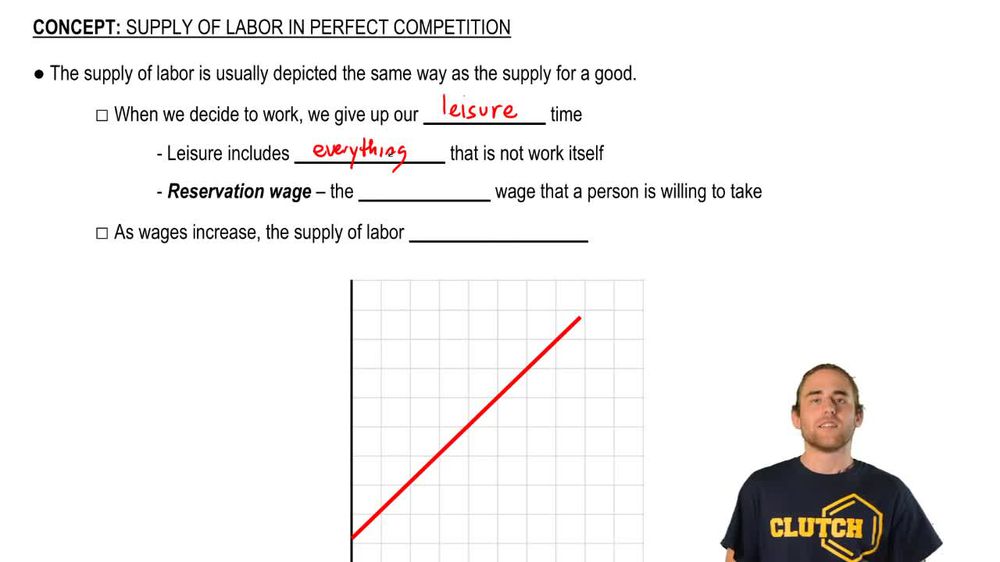
 03:17
03:17