What happens to the labor supply curve when the population increases?
The labor supply curve shifts to the right, indicating an increase in labor supply.
How does a decrease in population affect the labor supply?
A decrease in population shifts the labor supply curve to the left, reducing labor supply.
What is meant by 'working age' in the context of labor supply demographics?
Working age typically refers to individuals between 18 and 65 years old who are eligible to participate in the labor force.
How did the entry of the baby boomer generation into the workforce affect labor supply?
It caused a significant increase in labor supply as a large group reached working age.
What effect did more women entering the workforce have on labor supply?
It increased the labor supply as more individuals became available for work.
How can immigration impact the labor supply in a country?
Immigration increases the population, which shifts the labor supply curve to the right.
What is the substitution effect in the context of labor supply?
The substitution effect occurs when higher wages in a substitute labor market cause workers to leave the original market for the higher-paying one, reducing supply in the original market.
Give an example of how alternative job opportunities can shift labor supply.
If wages for pastry chefs rise, pizza chefs may switch to pastry jobs, decreasing labor supply in the pizza market.
What happens to the labor supply in a market if wages fall in a substitute market?
Labor supply in the original market increases as workers move from the lower-paying substitute market.
Why is understanding labor supply shifts important for analyzing labor markets?
It helps explain changes in employment ratios and economic equilibrium in labor markets.
How do changes in demographics, such as age distribution, affect labor supply?
A higher proportion of working-age individuals increases labor supply, while an aging population can decrease it.
What role does labor force participation play in aggregate labor supply?
Higher labor force participation increases aggregate labor supply, affecting overall employment and economic output.
How did societal changes in the 20th century affect women's participation in the labor force?
More women began working outside the home, significantly increasing the labor supply.
What is the effect on the original labor market if wages in a similar market increase?
The labor supply in the original market decreases as workers move to the higher-paying market.
How can birth and death rates influence labor supply over time?
If births exceed deaths, the population and labor supply tend to increase over time.
 Back
Back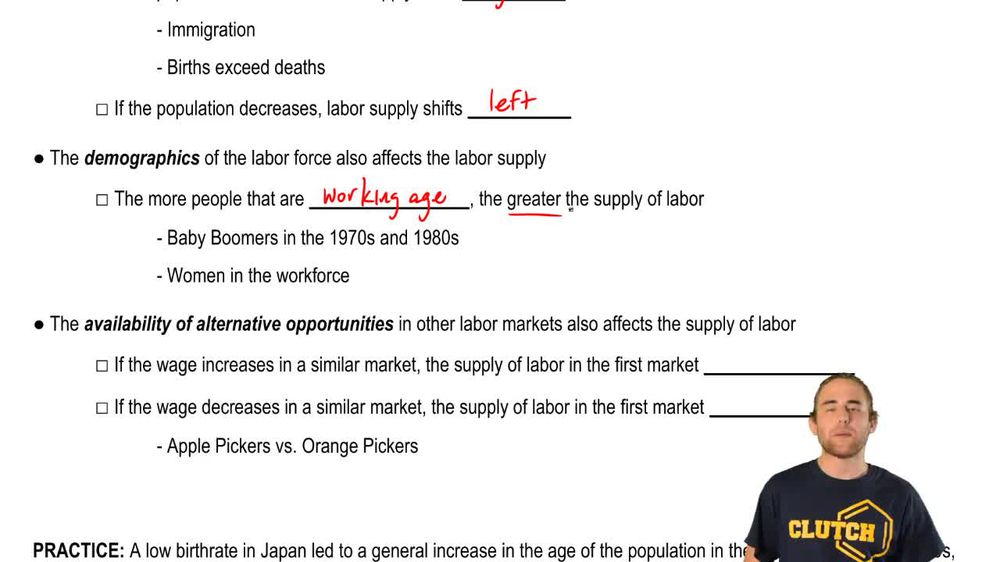
 03:47
03:47