Skip to main content
Macroeconomics
My Course
Learn
Exam Prep
AI Tutor
Study Guides
Flashcards
Explore
Try the app
My Course
Learn
Exam Prep
AI Tutor
Study Guides
Flashcards
Explore
Try the app
Back
Shifts in Labor Demand definitions
You can tap to flip the card.
Labor Demand
You can tap to flip the card.
👆
Labor Demand
Represents how many workers firms want to hire at various wage levels, influenced by output price and productivity.
Track progress
Control buttons has been changed to "navigation" mode.
1/15
Related flashcards
Recommended videos
Shifts in Labor Demand quiz
Shifts in Labor Demand
15 Terms
Guided course
03:09
Shifts in Labor Demand:Technological Change (II)
Guided course
06:57
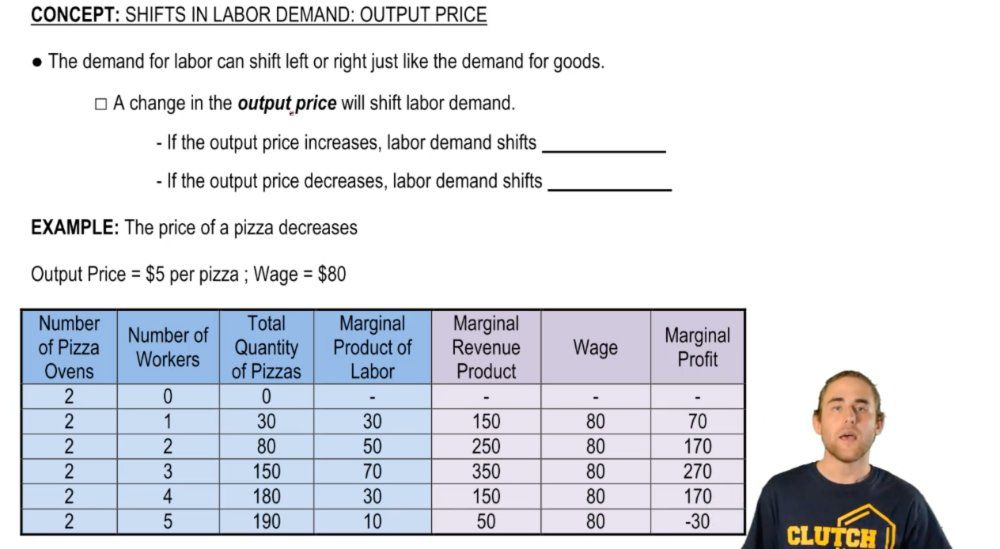
Shifts in Labor Demand:Output Price
Guided course
03:01
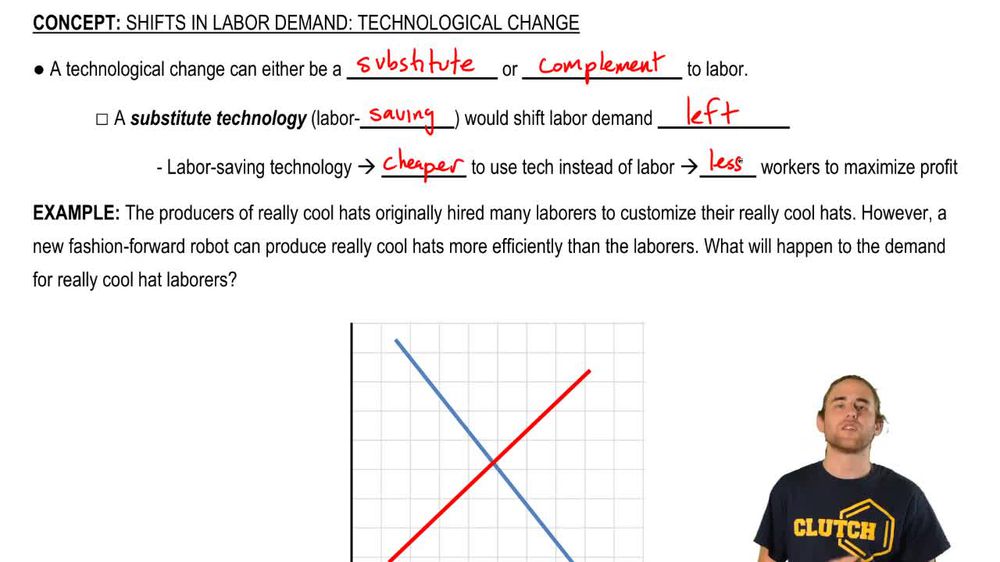
Shifts in Labor Demand:Technological Change (I)
Terms in this set (15)
Hide definitions
Labor Demand
Represents how many workers firms want to hire at various wage levels, influenced by output price and productivity.
Output Price
The selling price of a firm's product, which directly impacts the value firms place on hiring additional workers.
Marginal Revenue Product
Calculated as output price times marginal product of labor, showing the extra revenue from hiring one more worker.
Marginal Product of Labor
The additional output produced by employing one more worker, holding other inputs constant.
Wage
The payment to workers for their labor, serving as the marginal cost when firms decide how many workers to hire.
Equilibrium
The point where labor supply equals labor demand, determining the market wage and employment level.
Labor-Saving Technology
A technological advancement that replaces workers, reducing the need for labor and shifting demand left.
Labor-Augmenting Technology
A technological improvement that boosts worker productivity, increasing labor demand and shifting demand right.
Productivity
A measure of how much output each worker produces, often increased by better technology or skills.
Demand Curve
A graphical representation showing the relationship between wage levels and the quantity of labor firms want to hire.
Supply Curve
A graph showing how many workers are willing to work at different wage levels.
Profit Maximization
The firm's goal of hiring workers up to the point where the extra revenue from the last worker equals their wage.
Complementary Technology
A tool or innovation that requires workers to operate, making them more productive and increasing labor demand.
Substitute Technology
A tool or machine that can perform tasks instead of workers, leading firms to hire fewer employees.
Equilibrium Wage
The wage rate at which the number of workers firms want to hire equals the number of workers willing to work.
 BackBack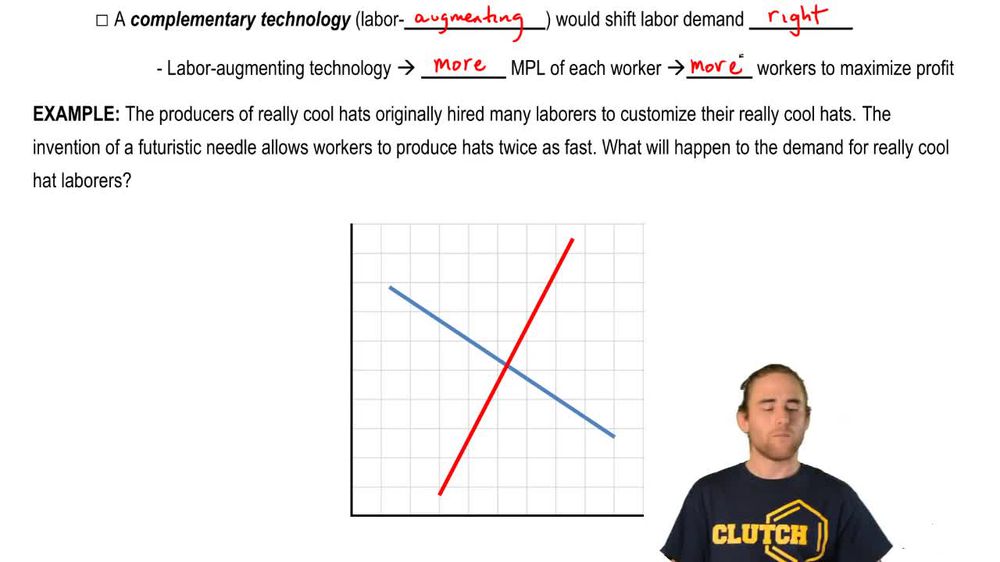
 03:09
03:09